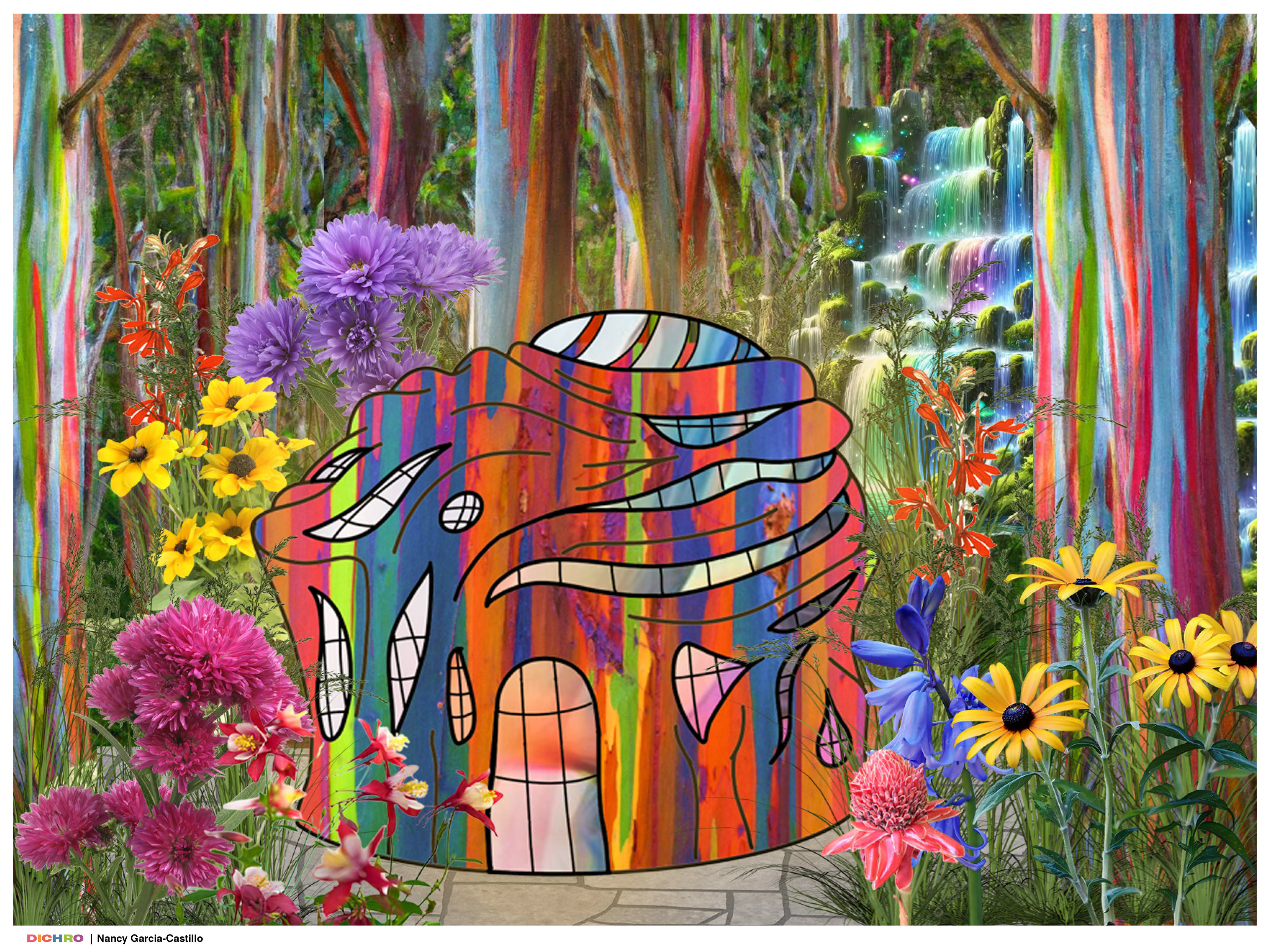
Reflection + Next Steps
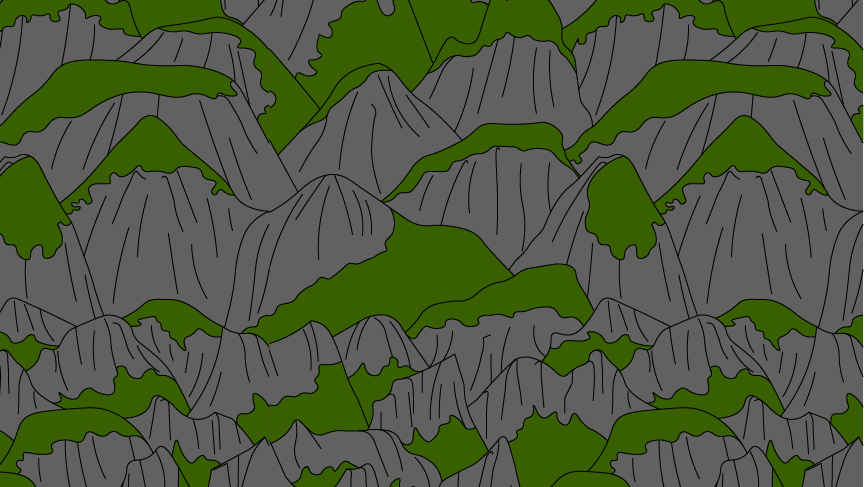
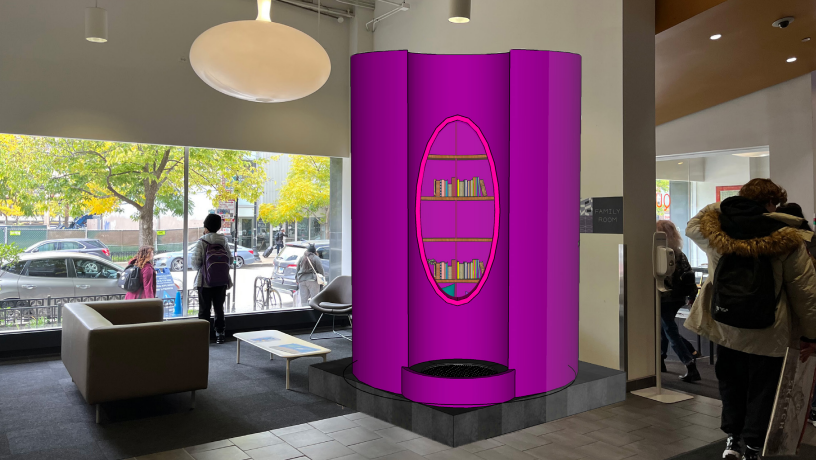
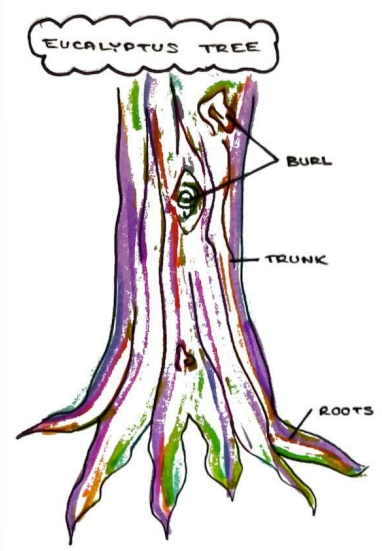
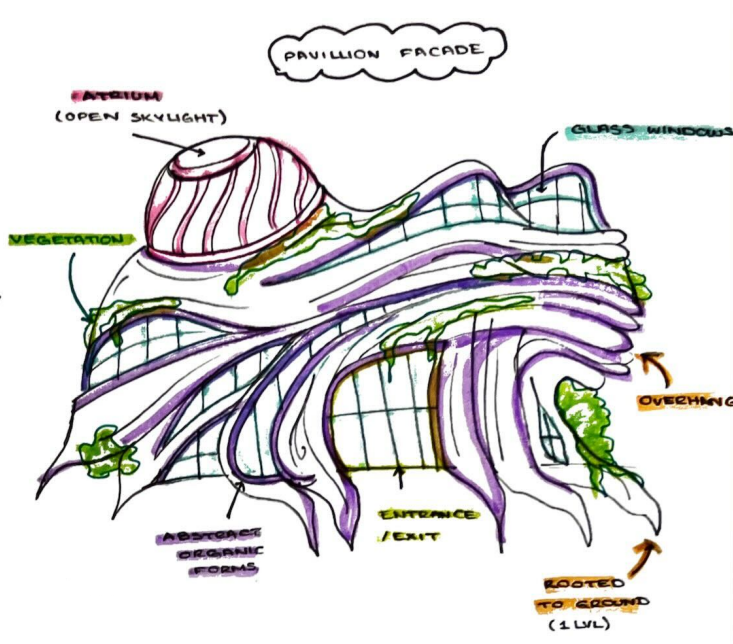
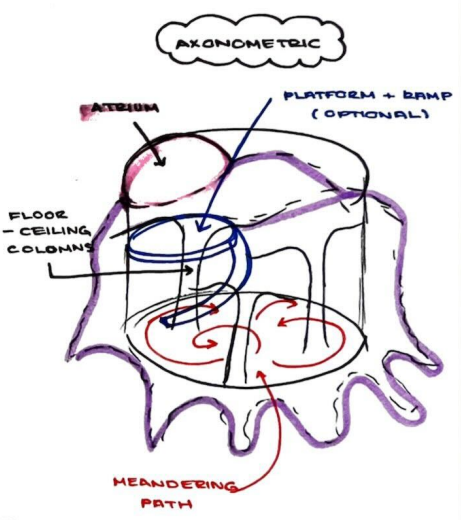
I identified 3 priority areas to refine: spatial organization, material selection, and the narrative. For spatial organization, I will scale down and simplify the design by sticking to a single level, abstract facade, and meandering paths. Instead of having various complex materials, I will focus on sustainable and eco-friendly materials. Color will be portrayed through finishes and lighting. Lastly, my new source of inspiration will take from a rainbow eucalyptus tree. My pavilion will be an eclectic event space that promotes community engagement, celebration, and memorable experiences.
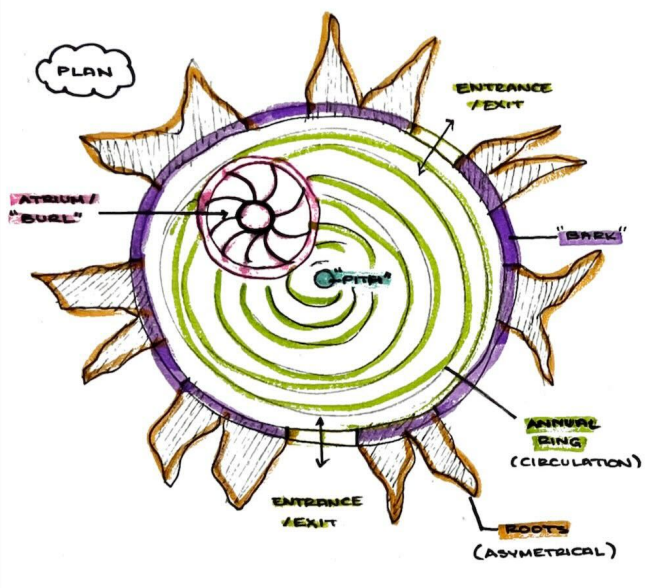
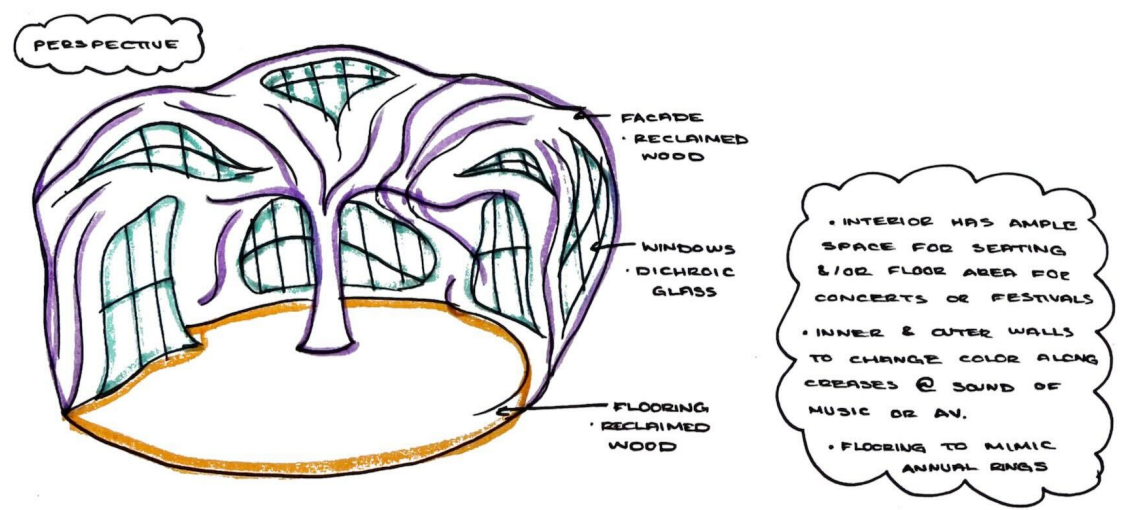
Model Making Research + Prototyping
After researching model making strategies, I began prototyping a physical model out of clay to support my design development. Using my hands, a ceramics tool kit, and spinning wheel, I was able to mold my pavilion at a 1/8" scale.
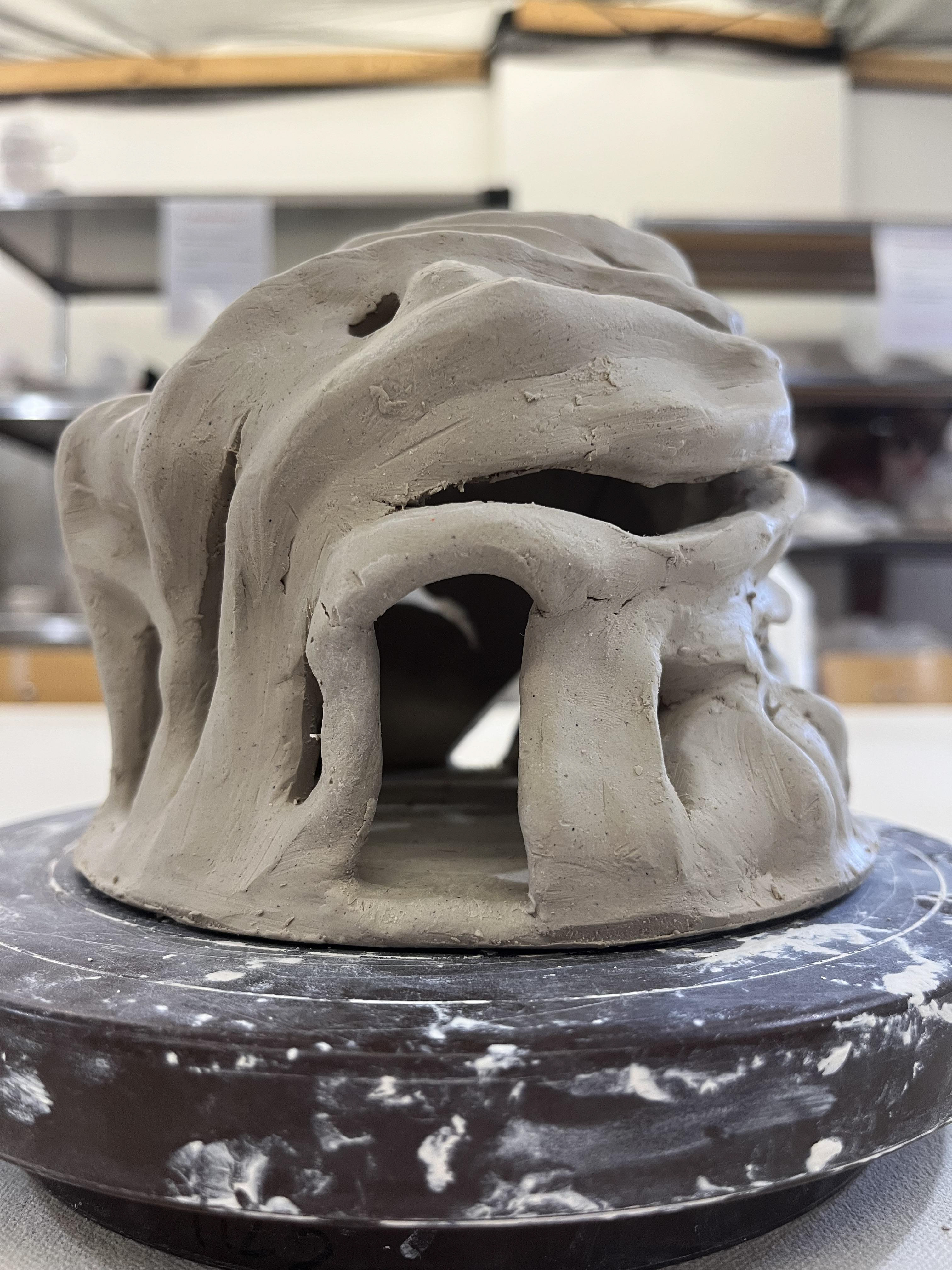
Front
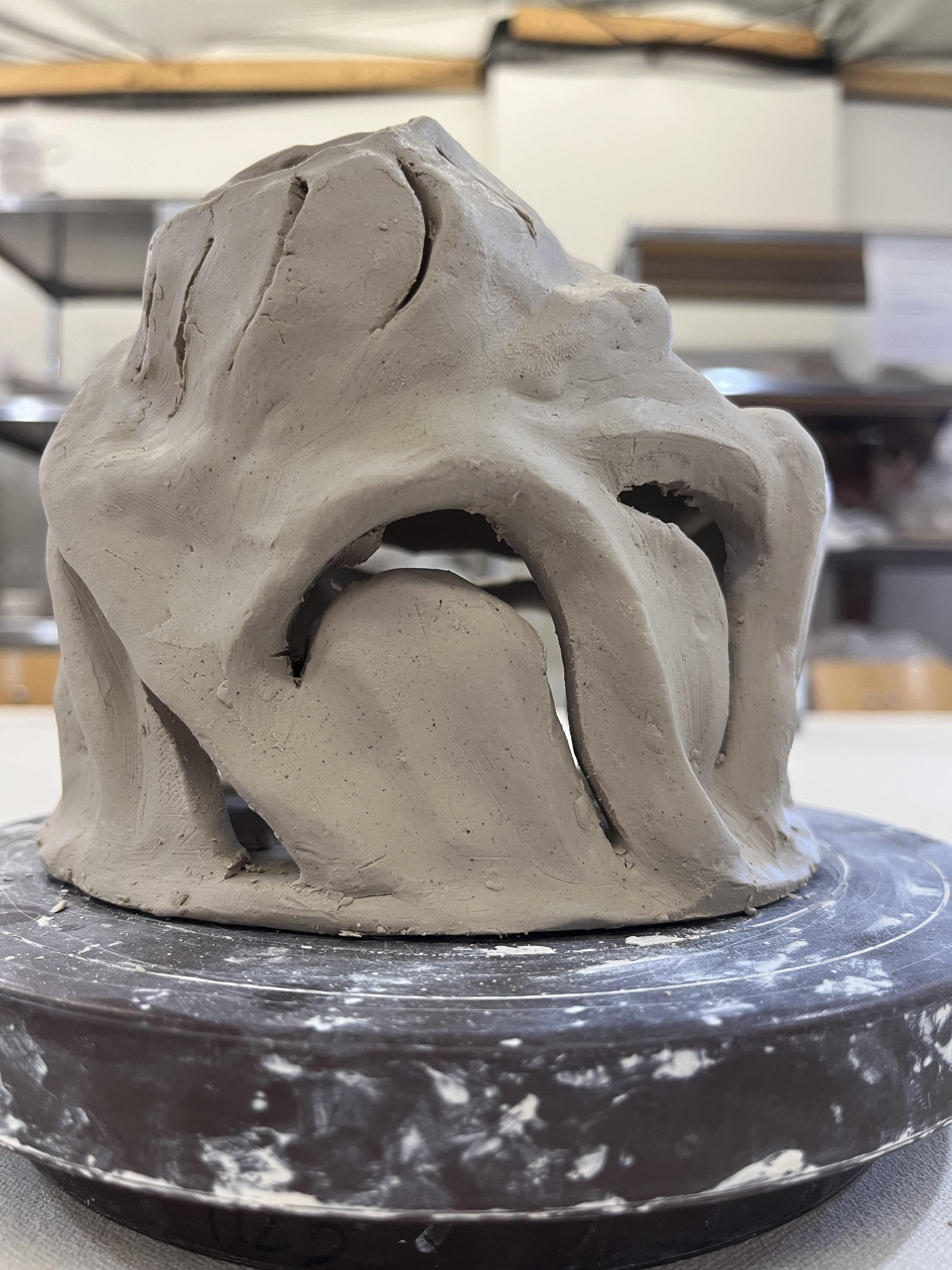
Left
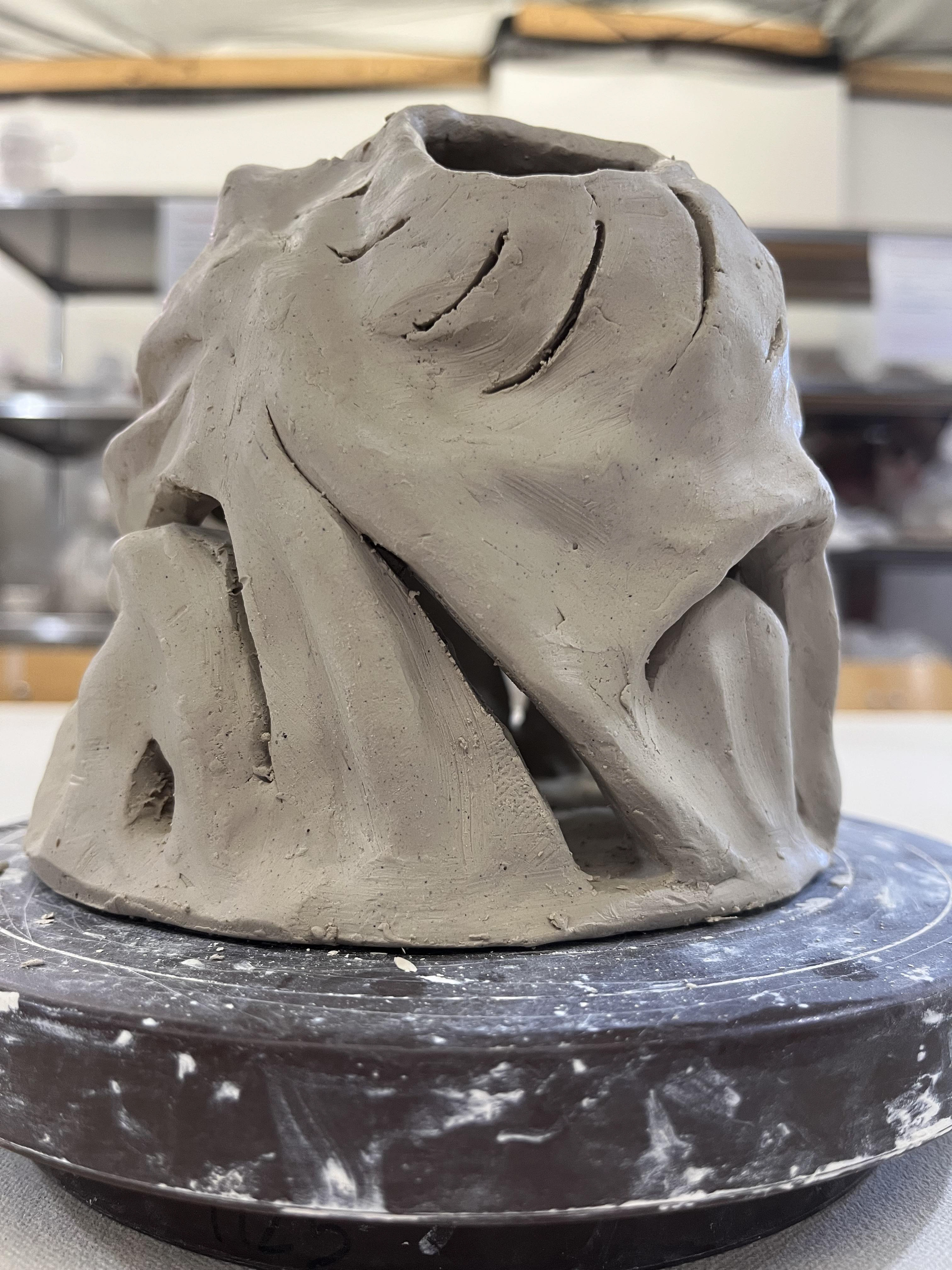
Back
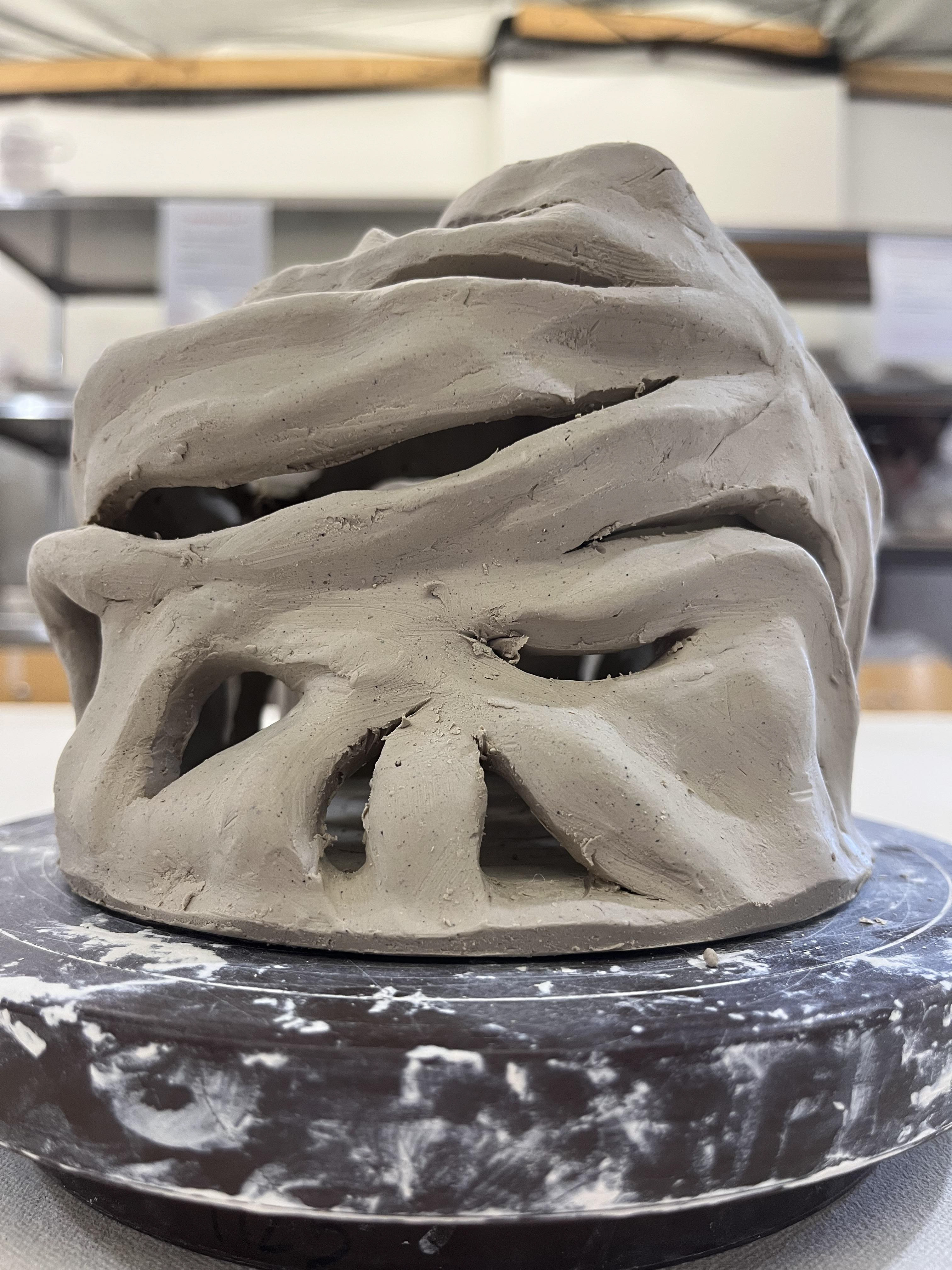
Right
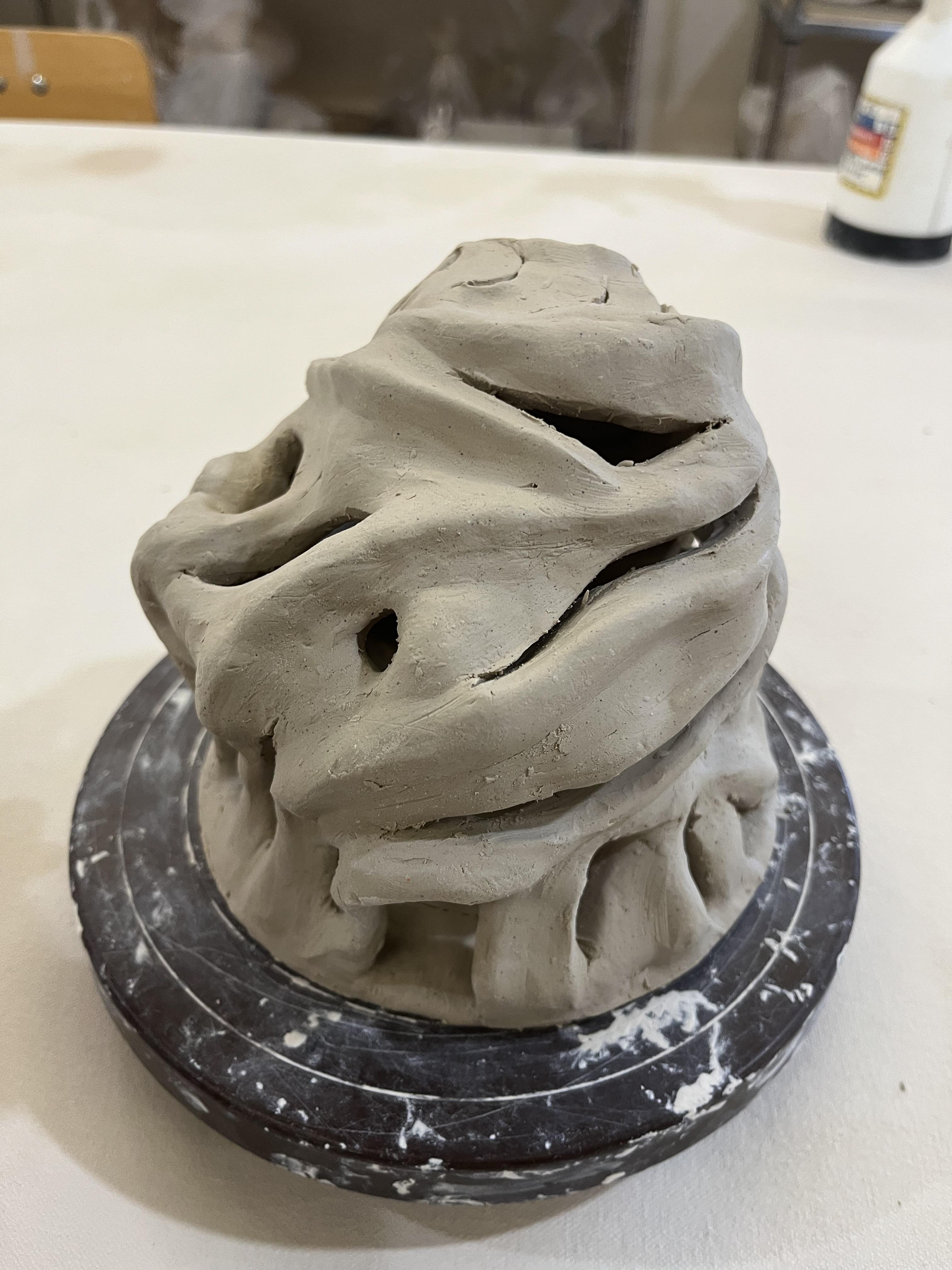
Front Perspective
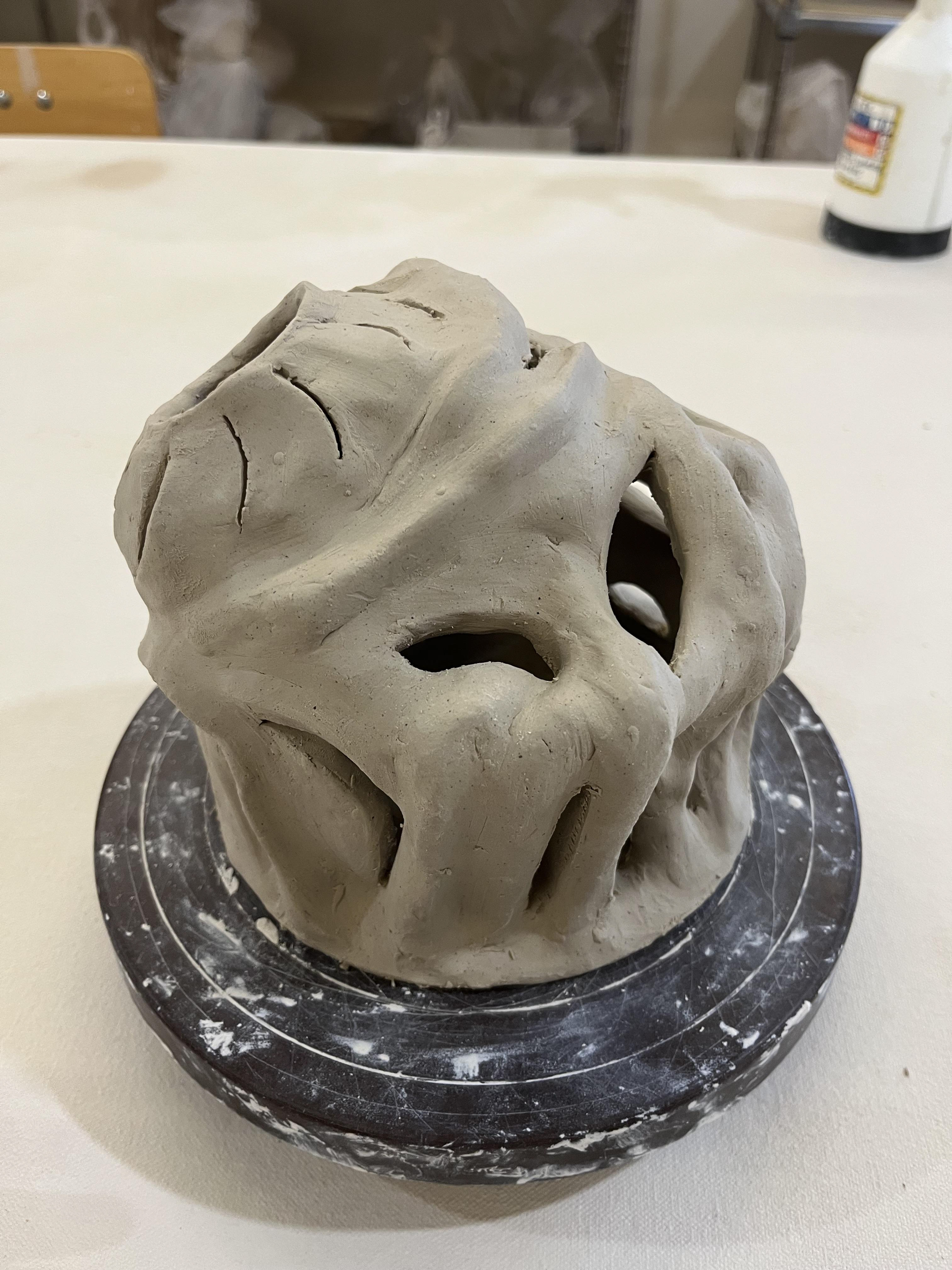
Left Perspective
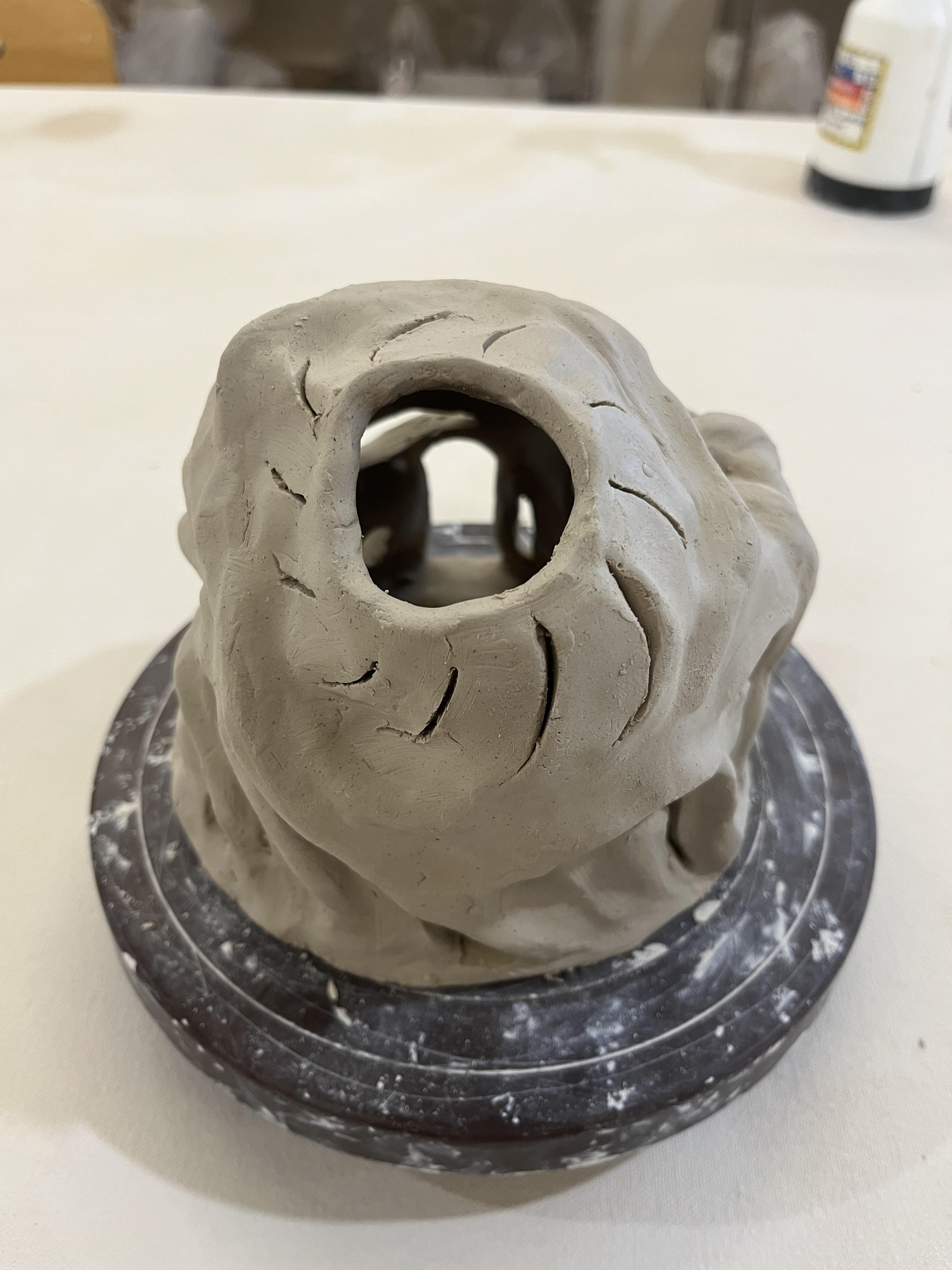
Back Perspective
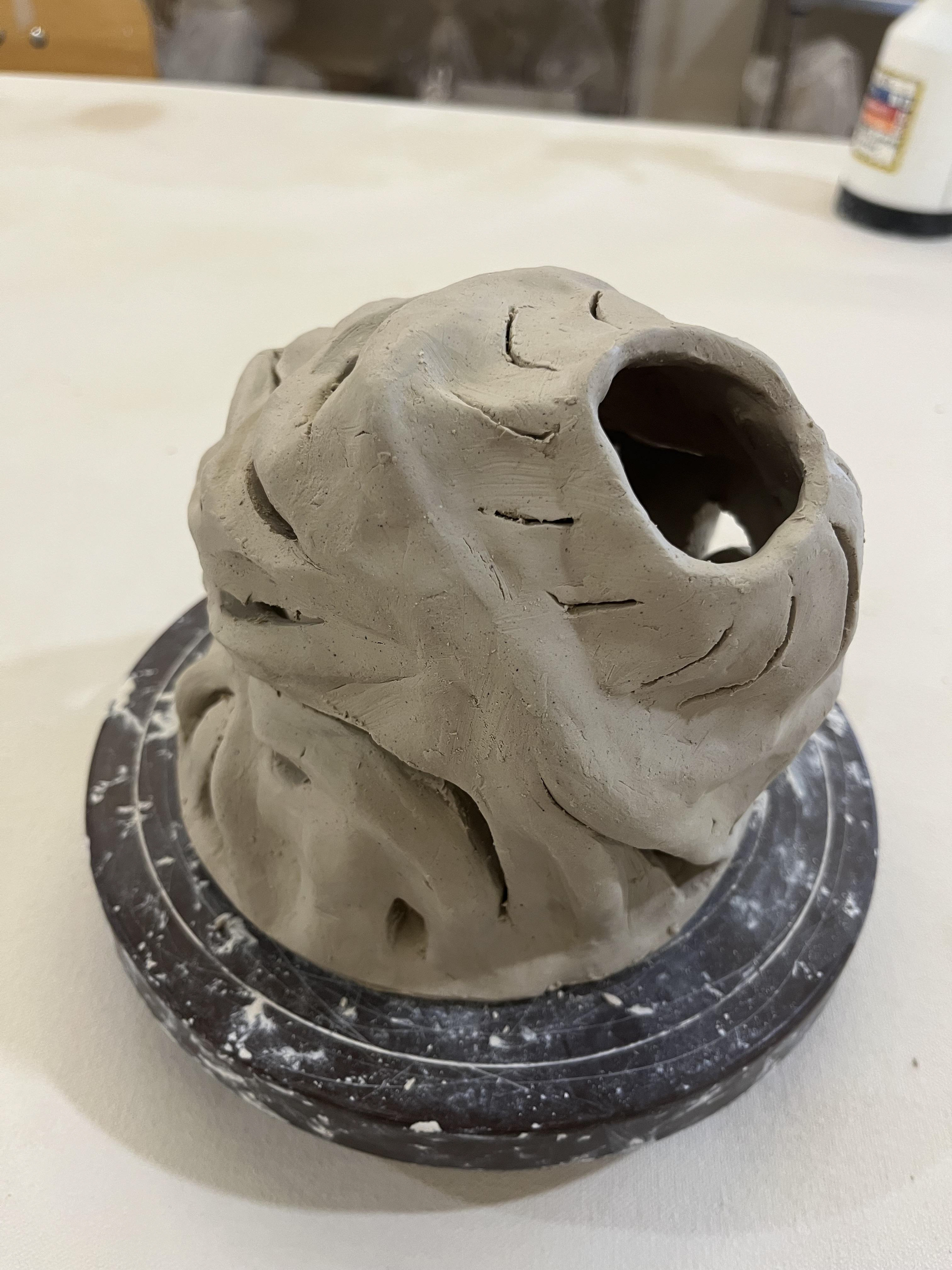
Right Perspective
Sectional Studies
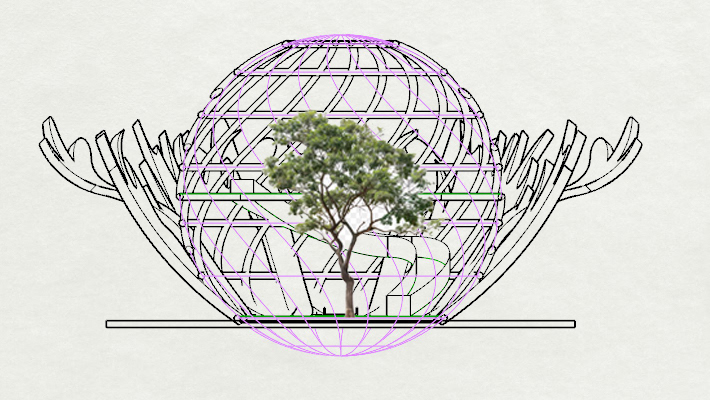
I chose two distinct spaces from my pavilion and sliced them through them in my head to visualize a section cut. Since I did not have a digital model, I hand-sketched a quick analysis of my space, focusing on experience and atmosphere. I then chose the most compelling view and began blocking out a larger, more refined version. Lastly, I developed my drawings into a set of refined perspective sections.
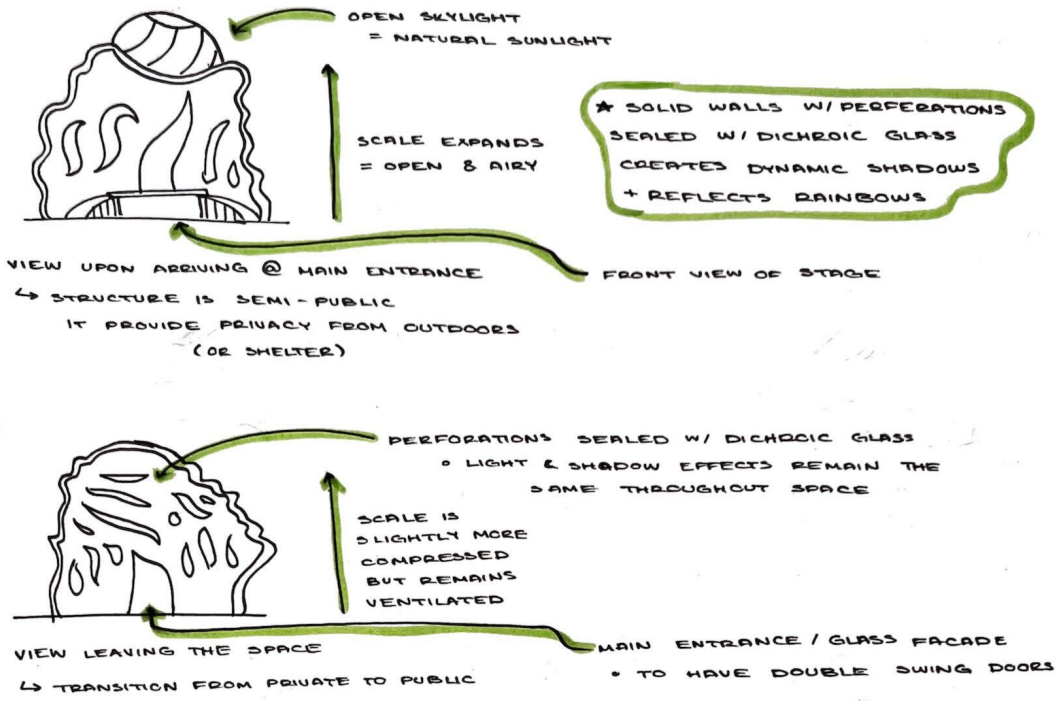
Warm-Up Sketches
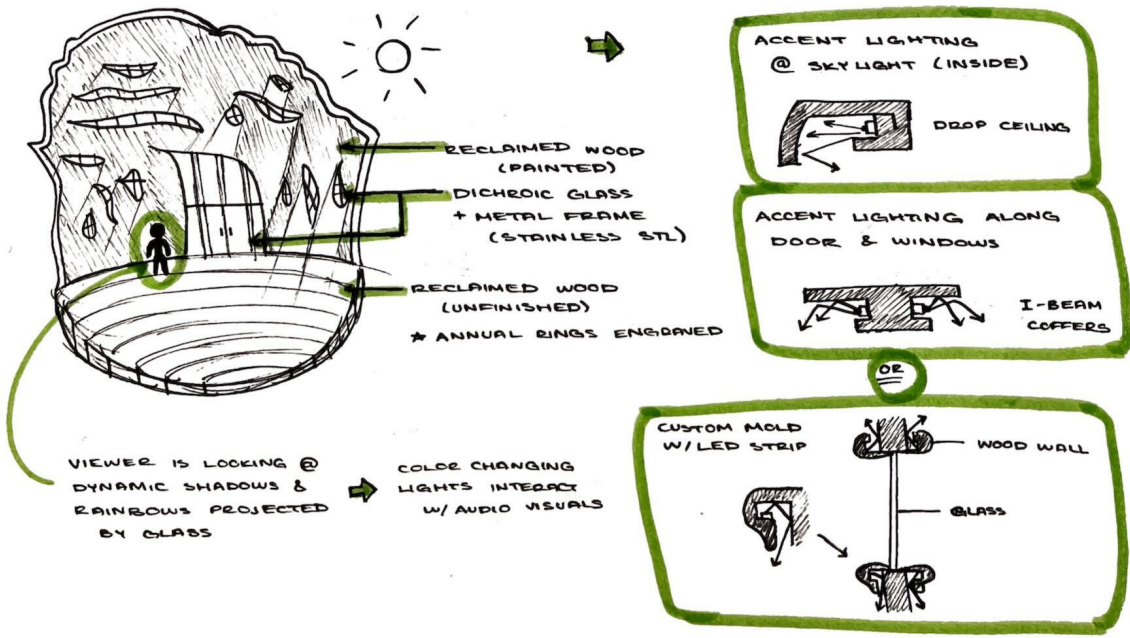
Drawing from the Inside
Perspective Sections

East Facing

North Facing

South Facing

West Facing
Concept into Architecture: Drawings + Diagrams
I refined my architectural drawings and developed key diagrams: a floor plan and an axonometric site plan. Using a 3D AutoCAD drawing derived from CADMAPPER, I was able to load the site into REVIT and create my plan according to scale. I took generic landscaping materials from Architextures and customized multicolored wood textures myself using Adobe Photoshop. The pavilion itself was digitally illustrated in Procreate using my physical model as reference. Once materials and light were added, I integrated into the site using photoshop.
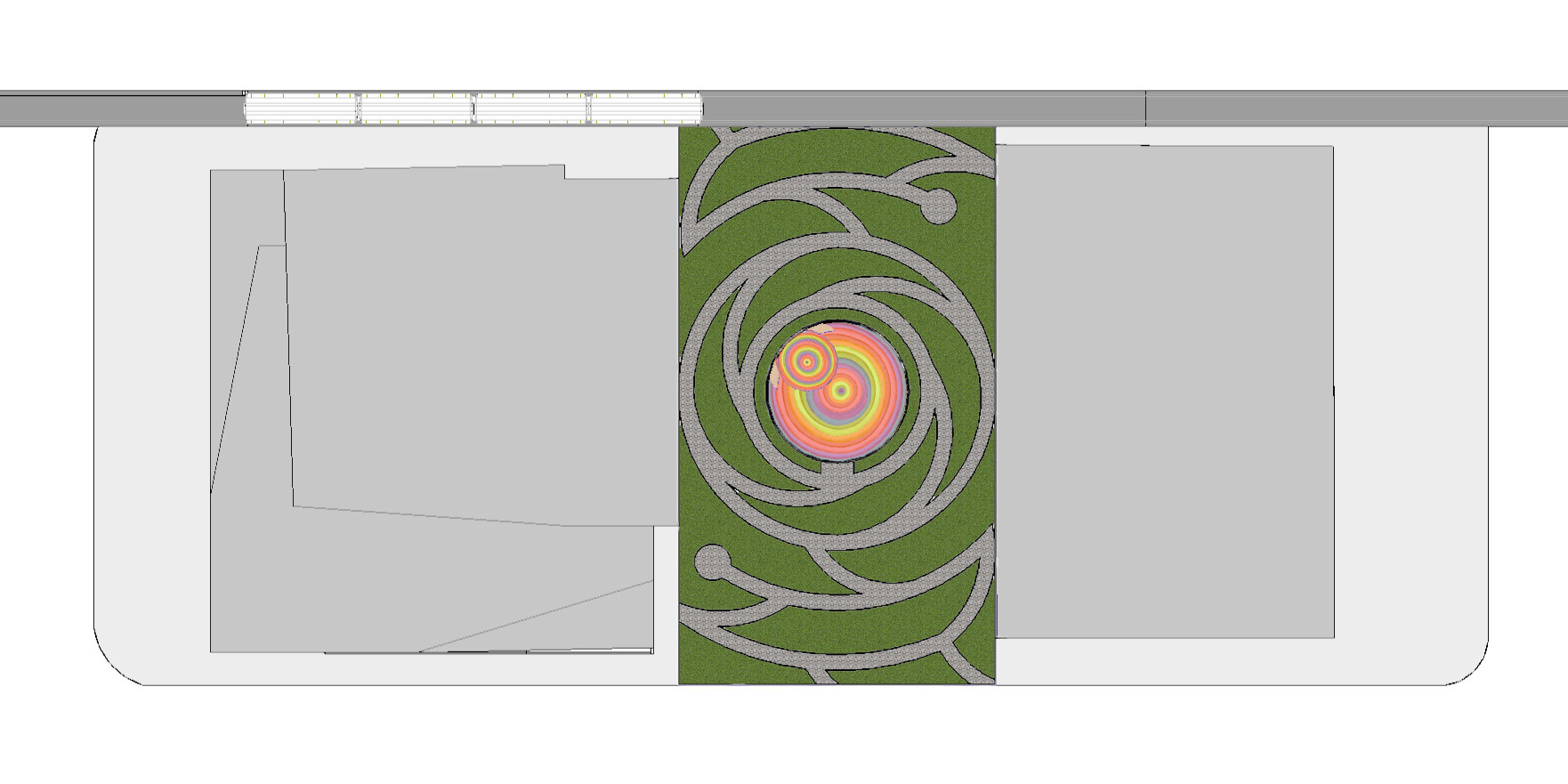
Rendered Floor Plan
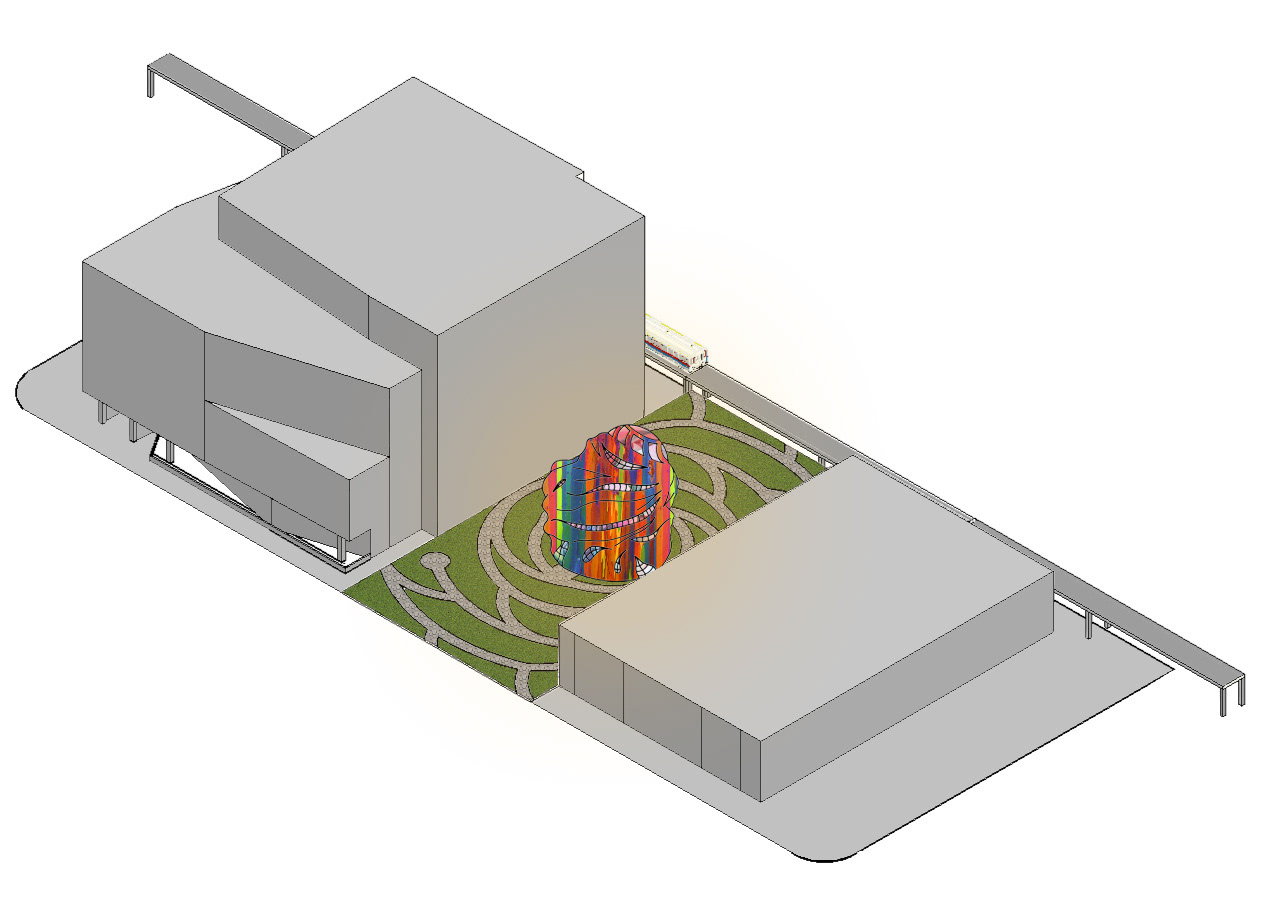
Rendered Axonometric Site Plan
Rendering - Emotional and Experiential Visuals
I created a series of emotionally resonant renderings that convey my architectural concept through atmosphere, spatial experience, and human interaction. The exterior views highlight materiality, light and shadow, and the relationship between the landscape and site context. Both the front and rear perspectives are shown at eye level, expressing distinct emotional tones and illustrating different times of day.
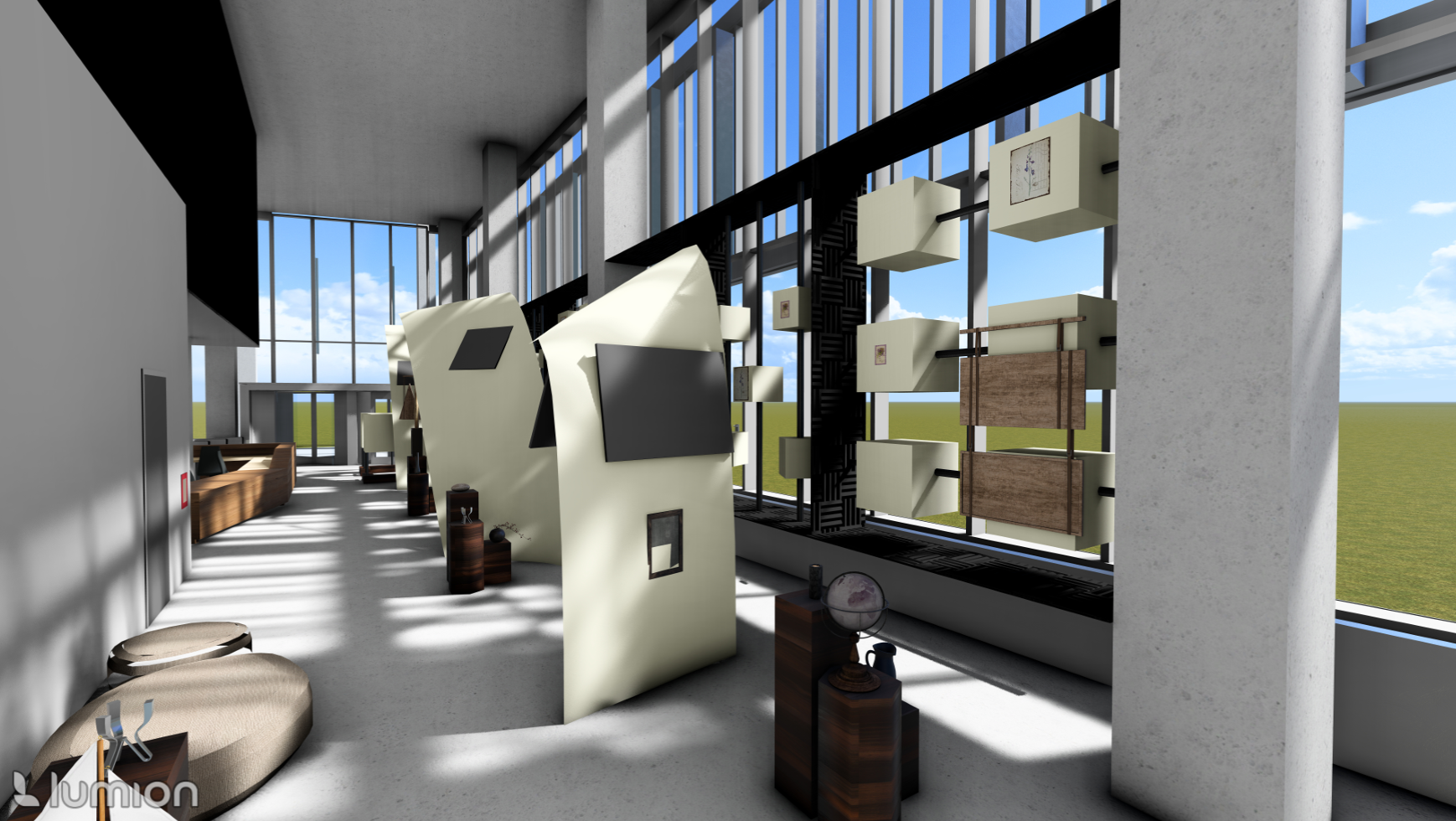
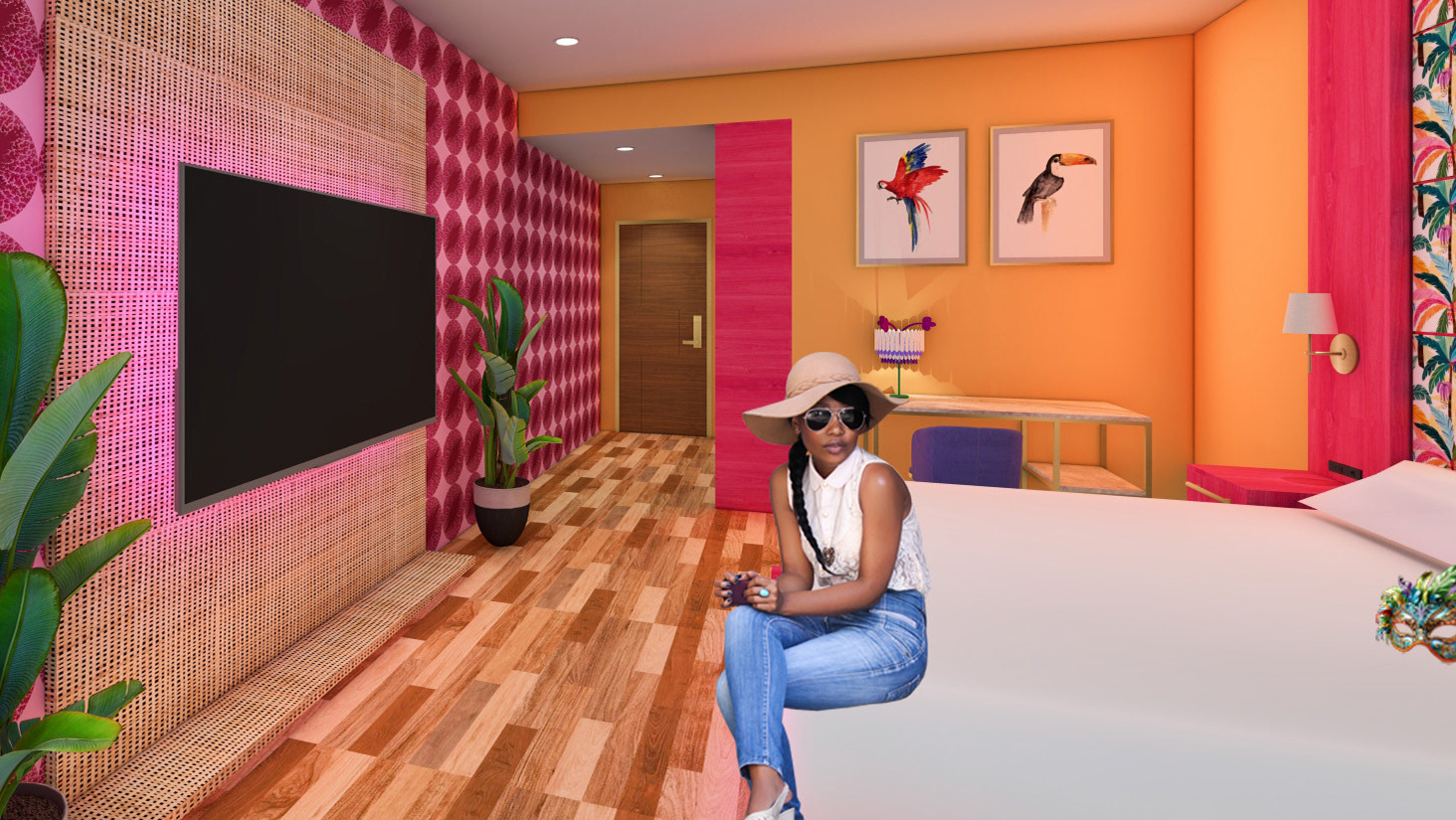
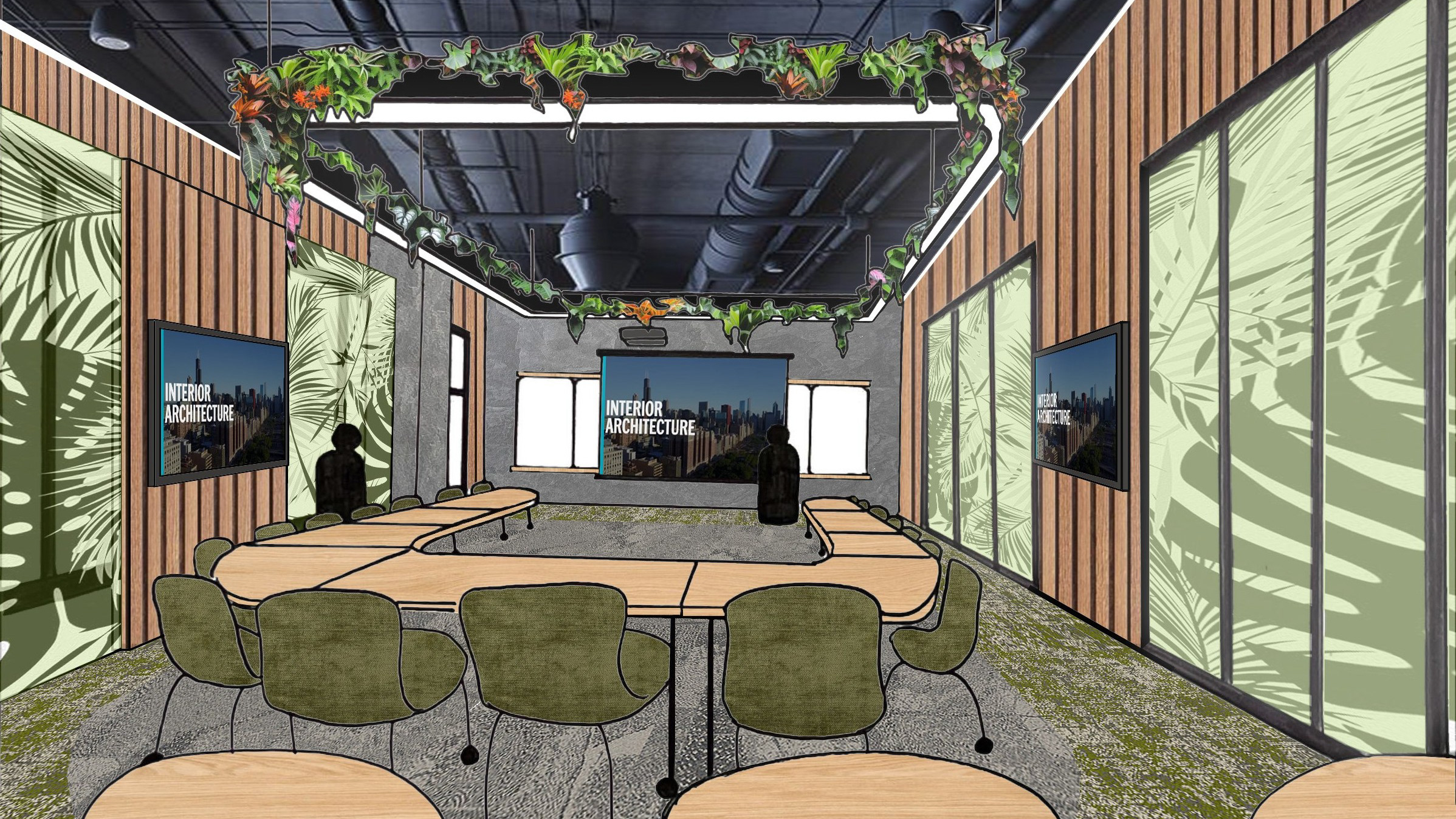
The interior renderings explore a variety of spatial experiences, emphasizing scale, light, materiality, and interaction. Using Lumion, I incorporated human figures and experimented with various camera effects to enhance realism. In Adobe Photoshop, I layered vegetation, added background elements, adjusted color, and introduced ambient lighting to further evoke mood and atmosphere.