Research: POE of my Space
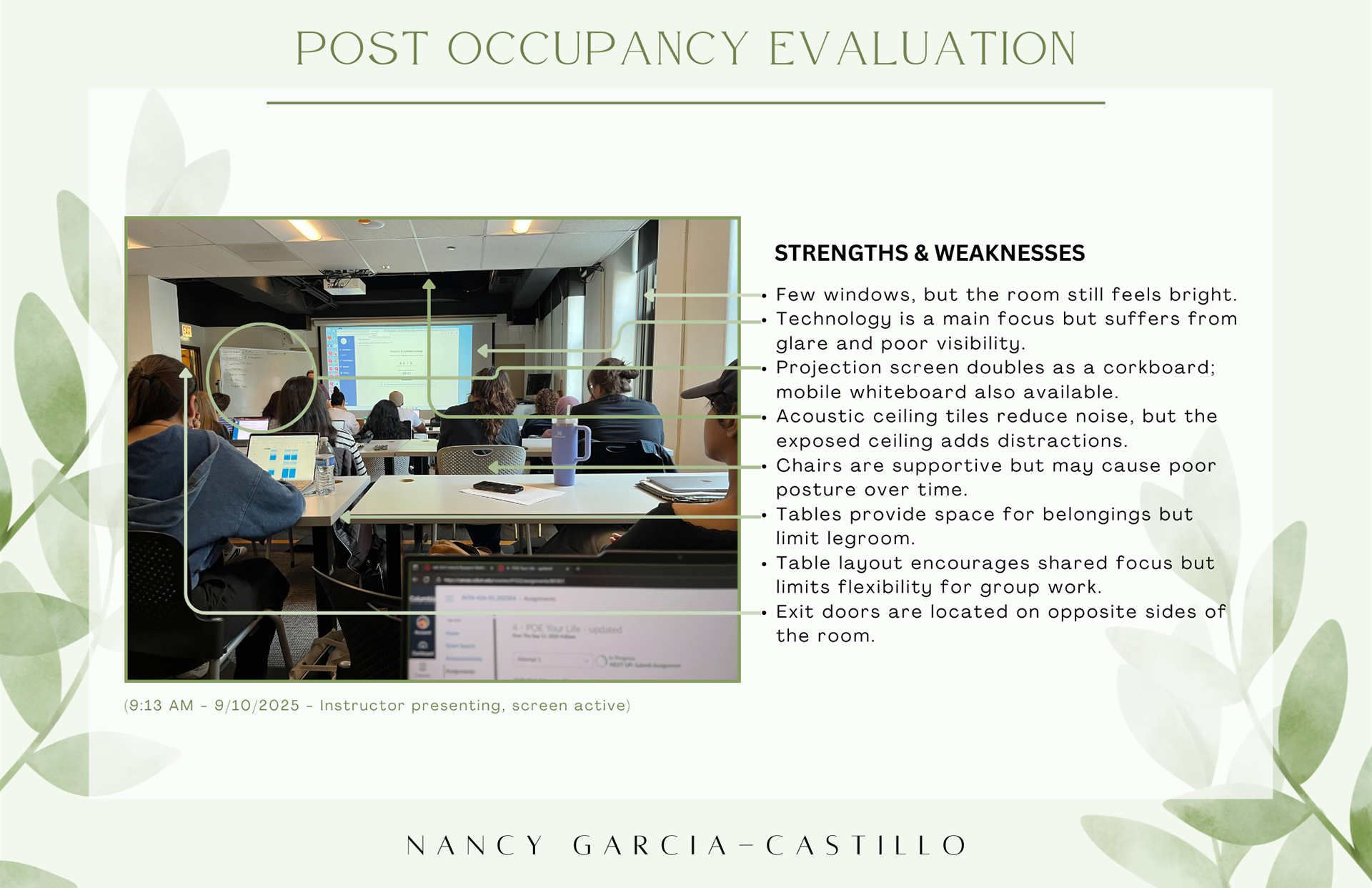
I decided to perform a Post Occupancy Evaluation (POE) of one of my classrooms this semester. I chose to sit in the back row, which I felt offered the best vantage point for observing the entire space. I began by sketching a floor plan of the classroom, noting the various affordances within the room. Over a 15-minute period, I recorded my observations and took photographs at the beginning, middle, and end of the session. I then analyzed the photographs using notations based on the five performance criteria.
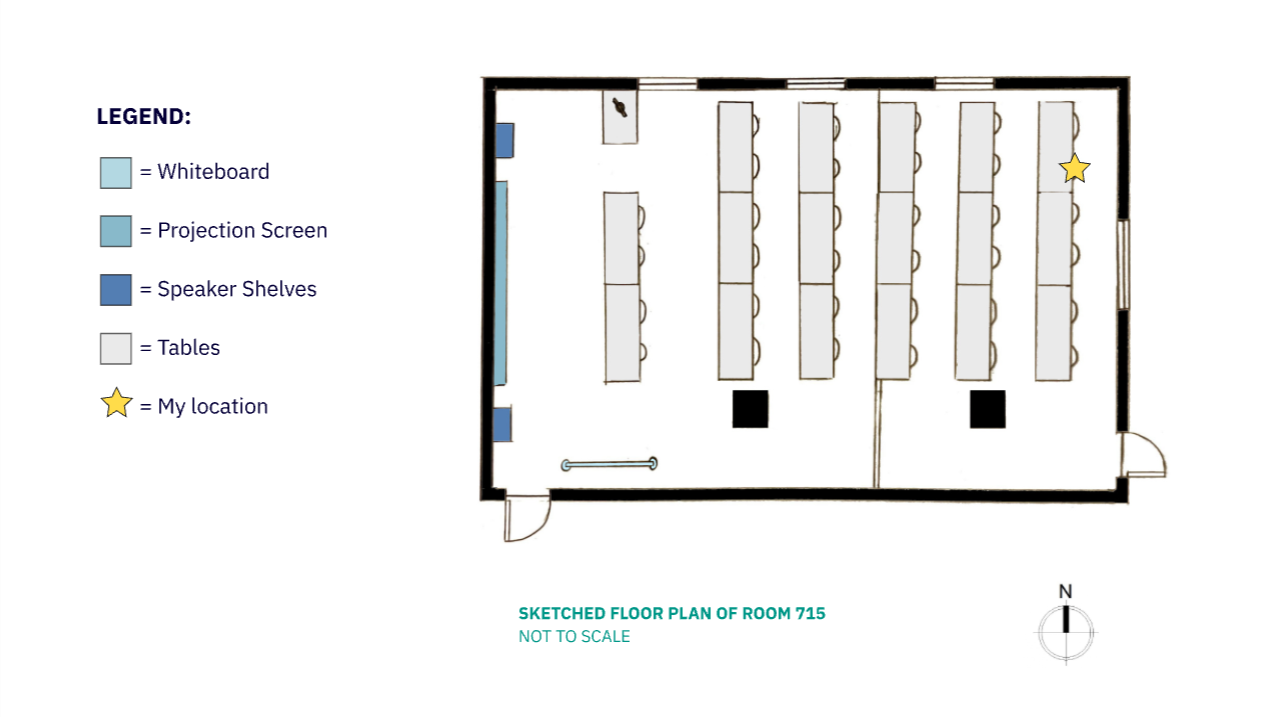
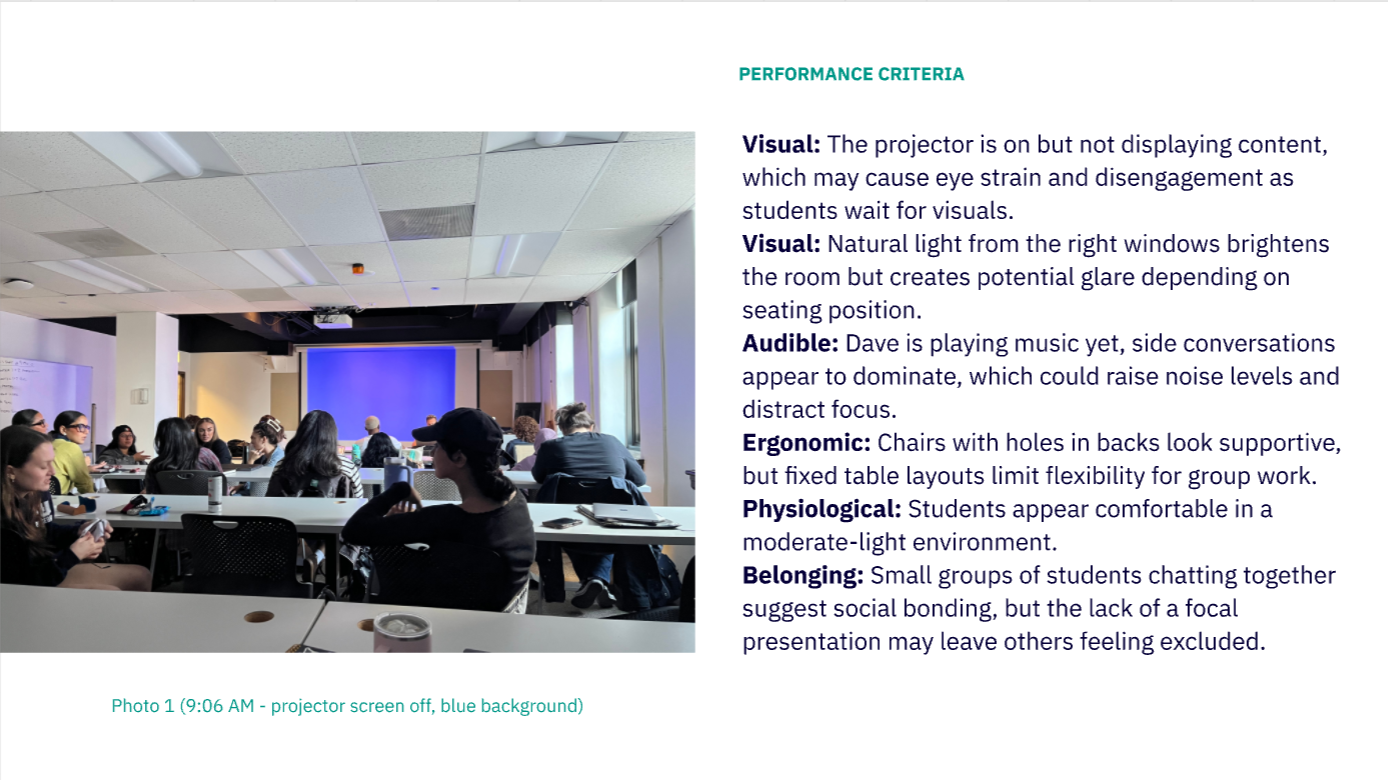
Photo 1: Performance Criteria
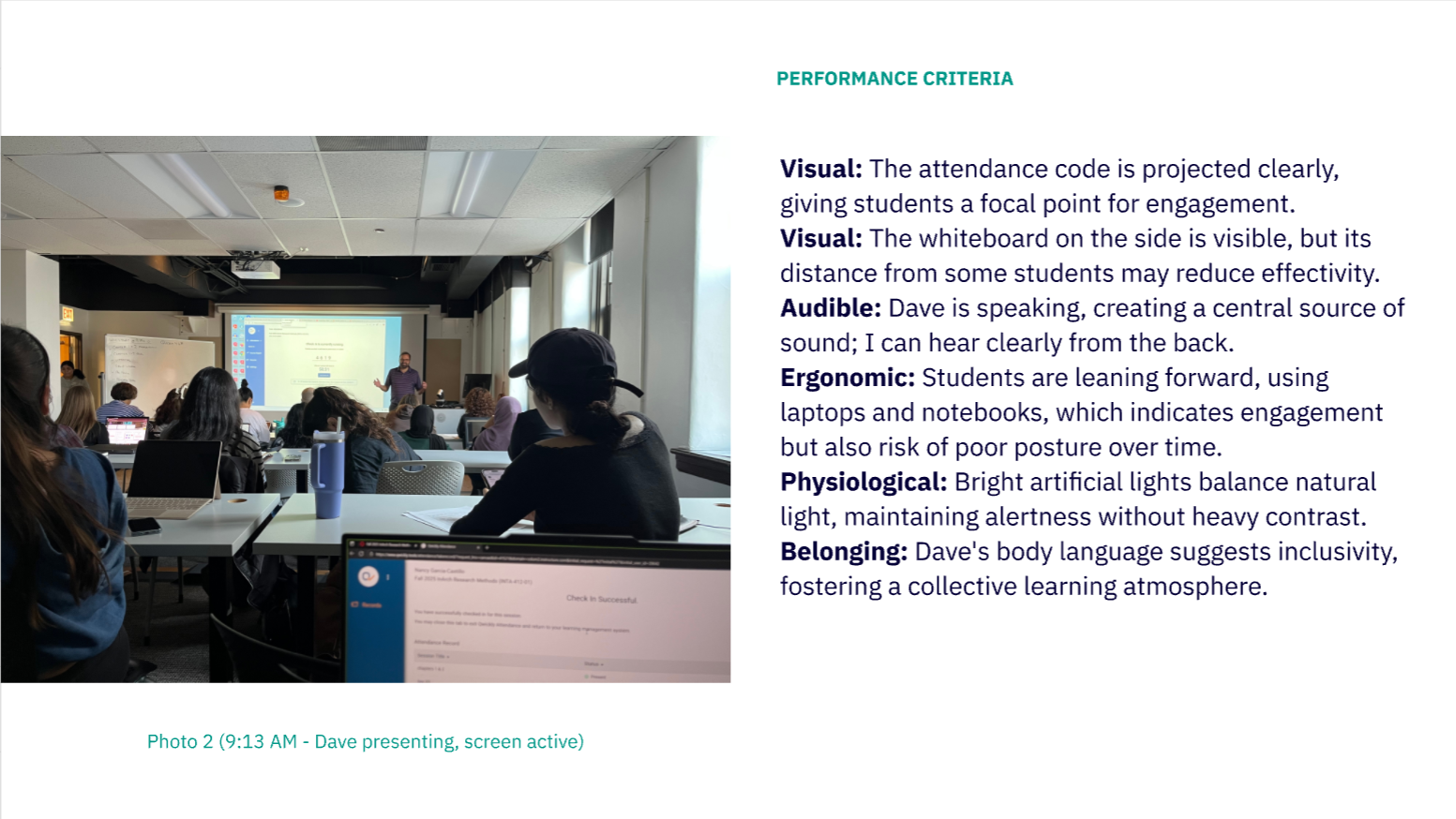
Photo 2: Performance Criteria
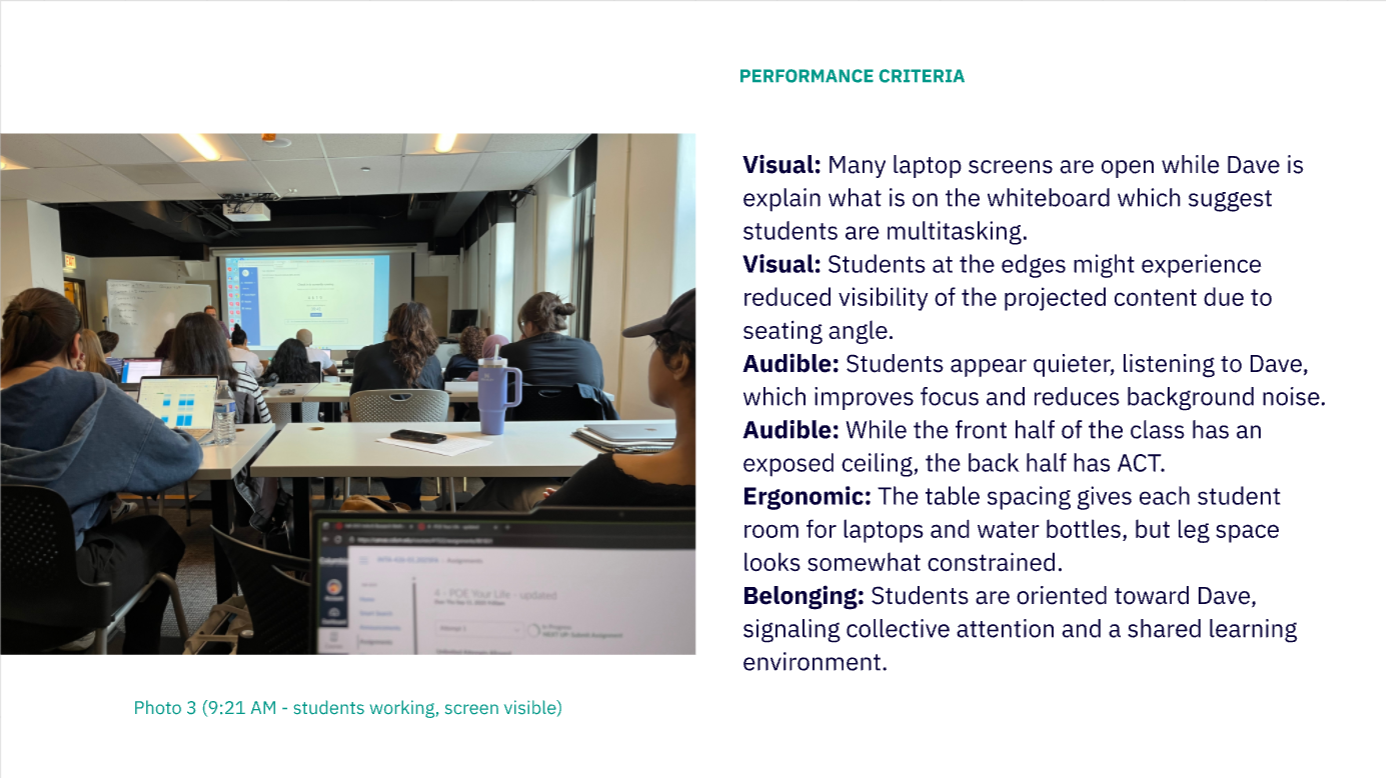
Photo 3: Performance Criteria
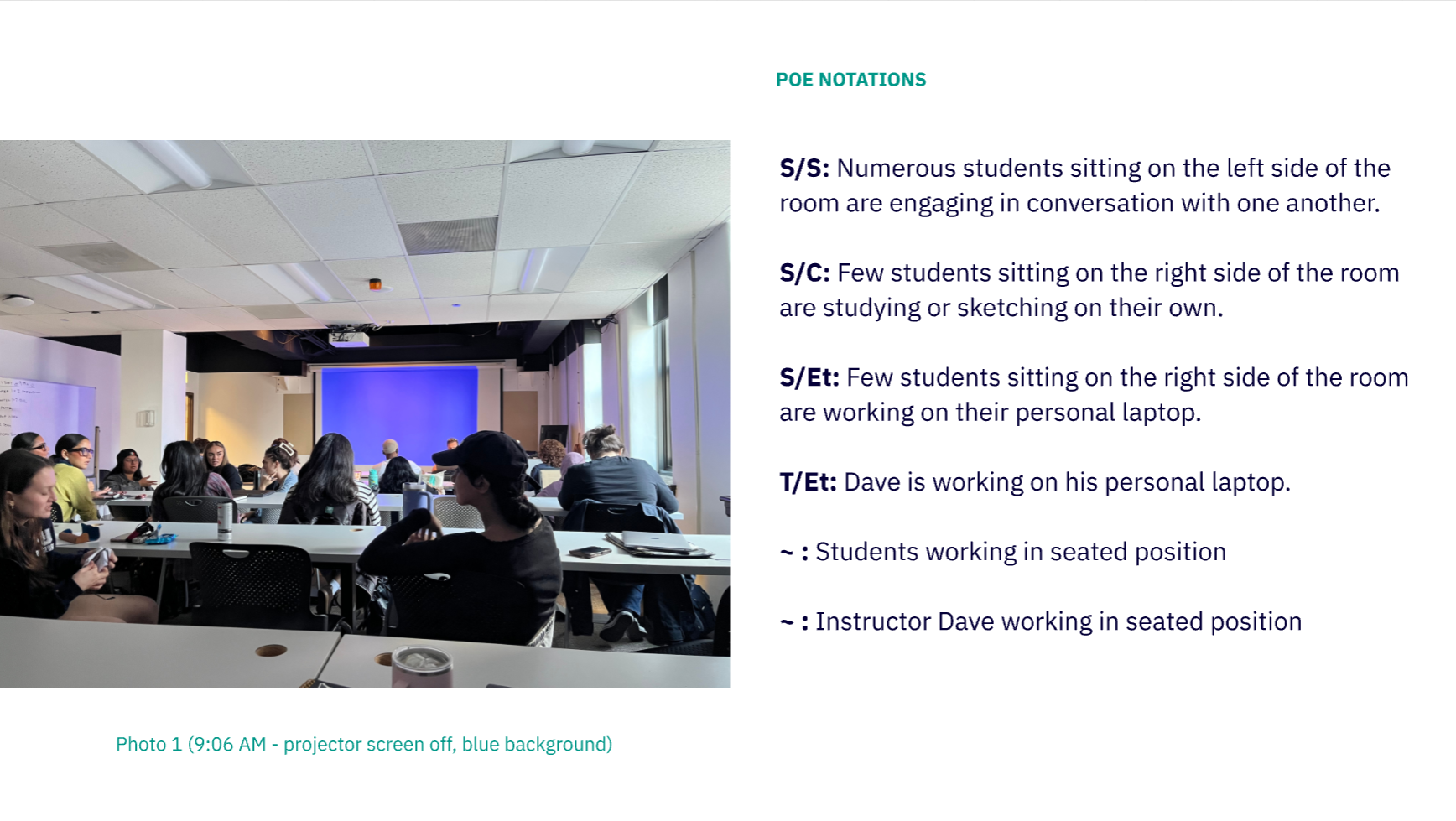
Photo 1: POE Notations
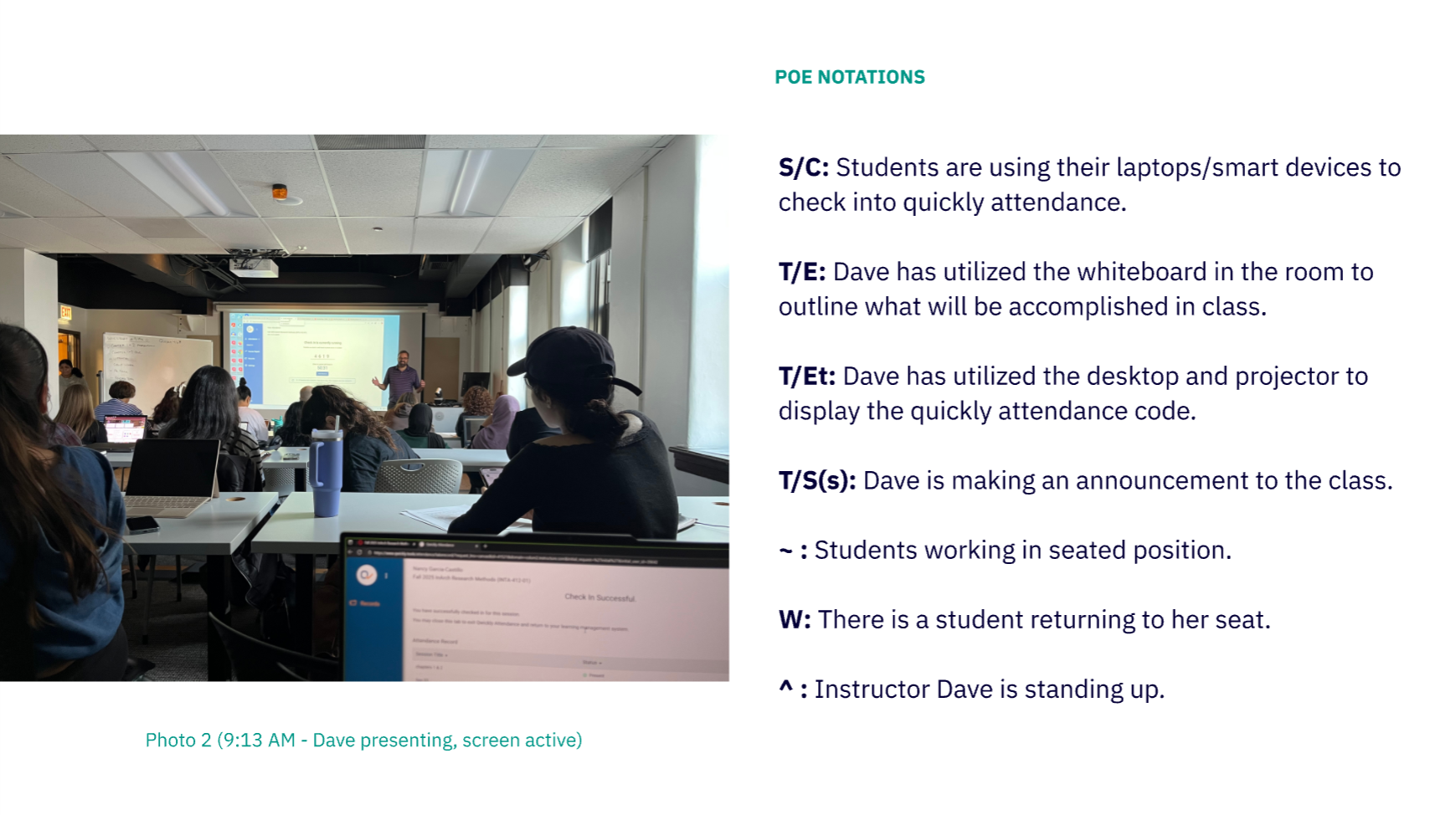
Photo 2: POE Notations
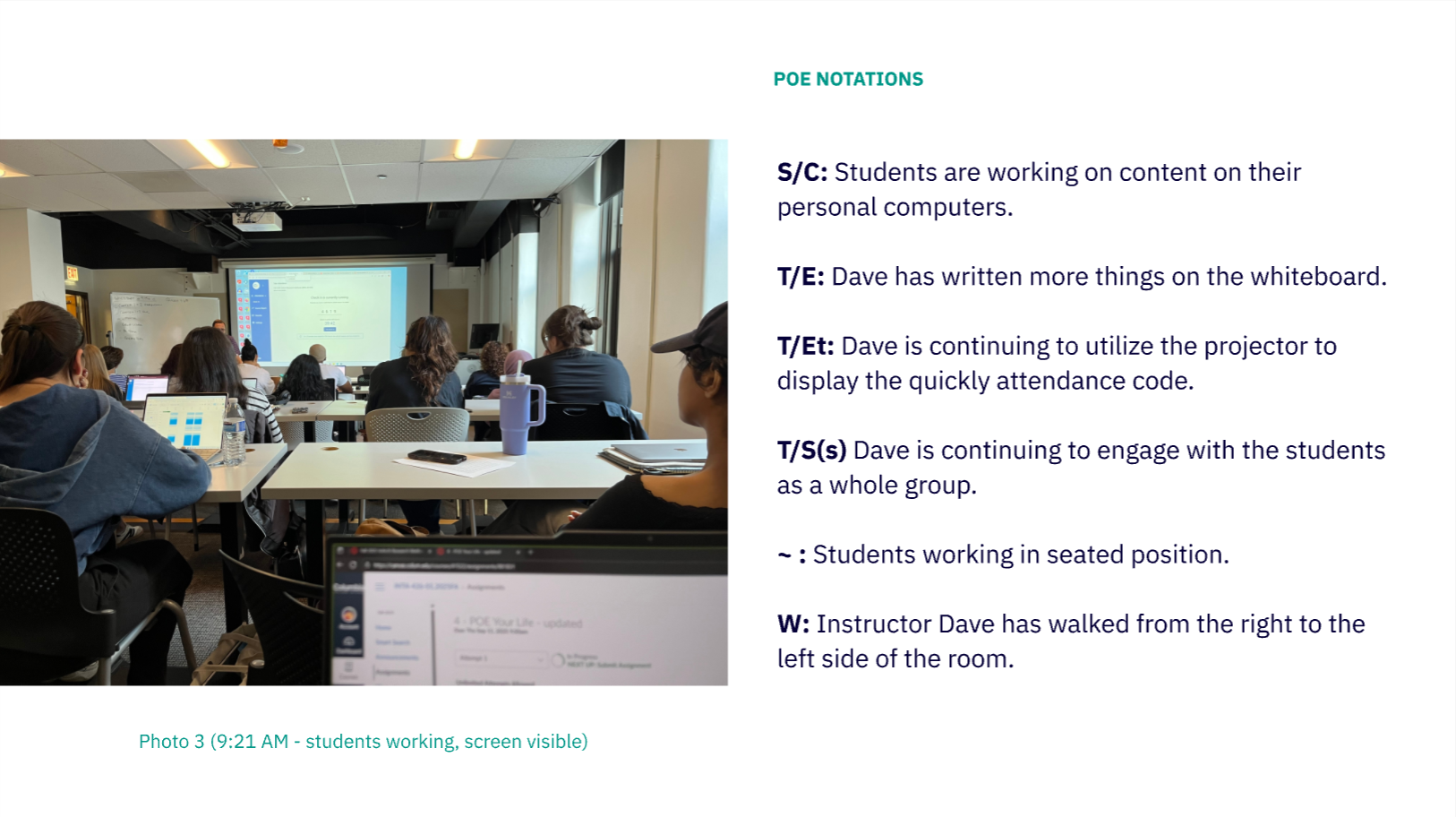
Photo 3: POE Notations
Synthesis: Design of my Space
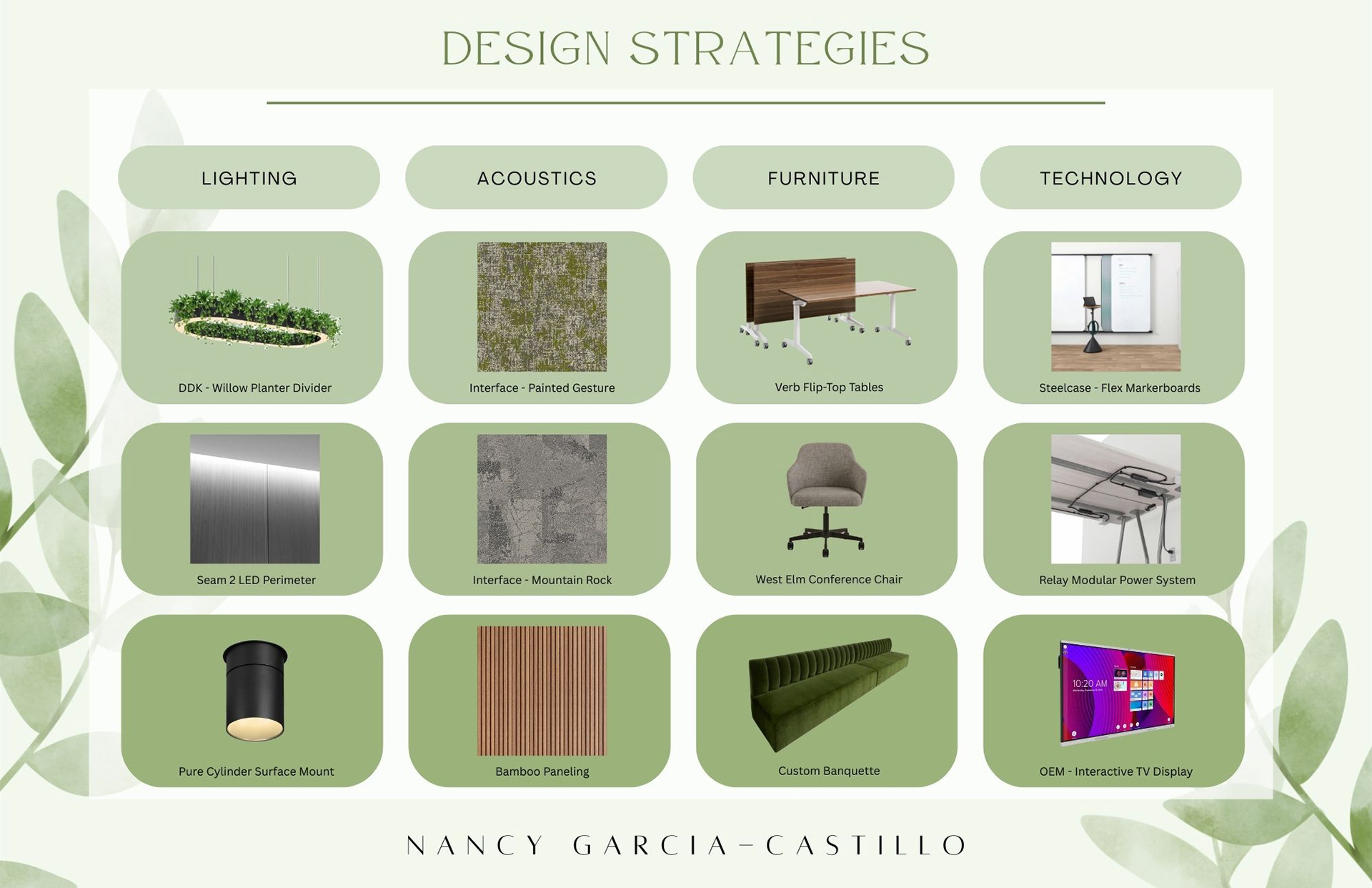
After conducting the POE, I performed a SWOT analysis of the classroom to assess its strengths, weaknesses, opportunities, and threats. From this analysis, I identified key design criteria for improvement, including seating for 28 students and one instructor, enhanced visibility, brighter lighting, upgraded acoustics, modular furniture, and the integration of new learning technologies. Using these criteria as a guide, I developed a series of conceptual sketches for the redesigned space.
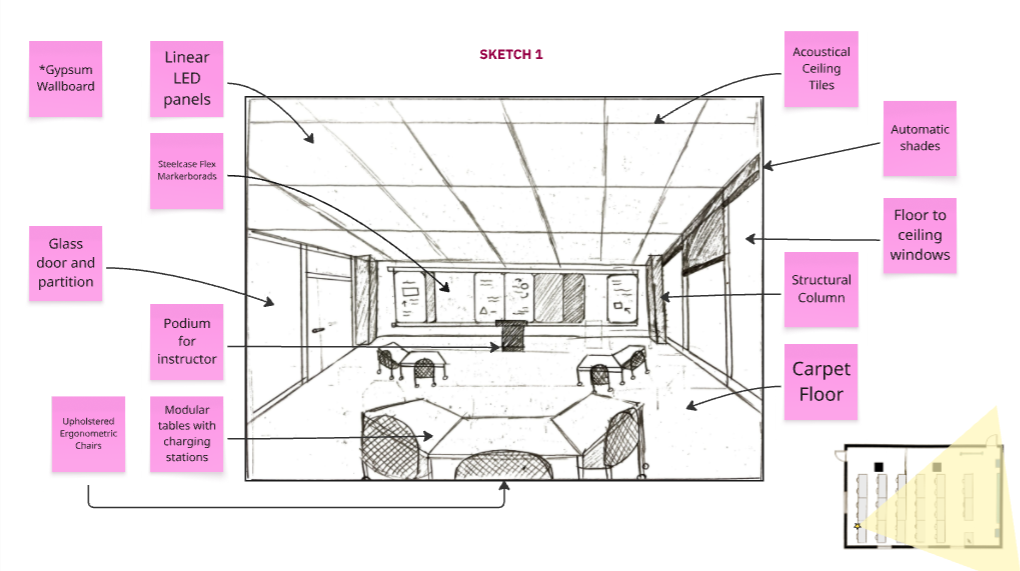
Perspective 1: Annotated
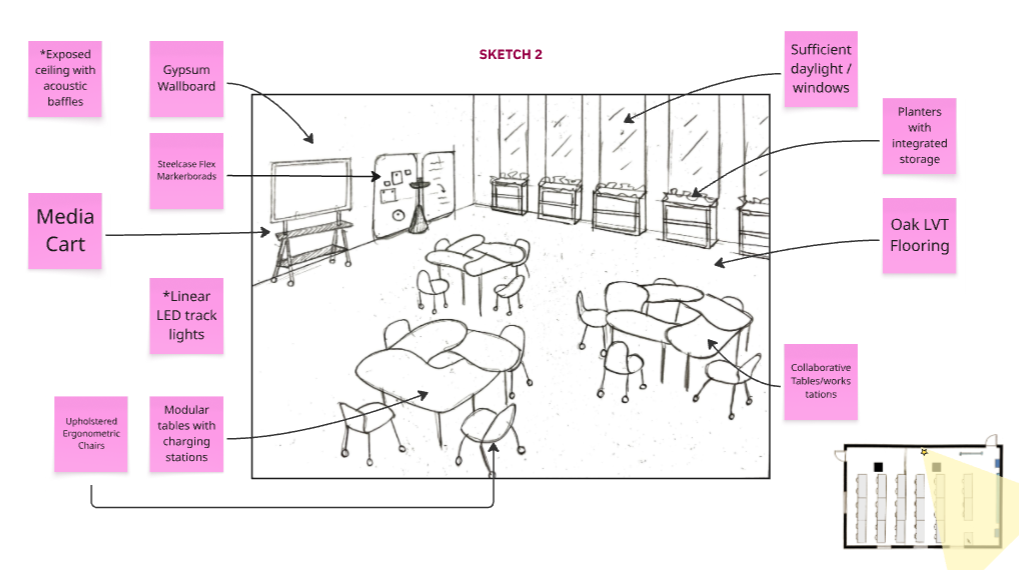
Perspective 2: Annotated
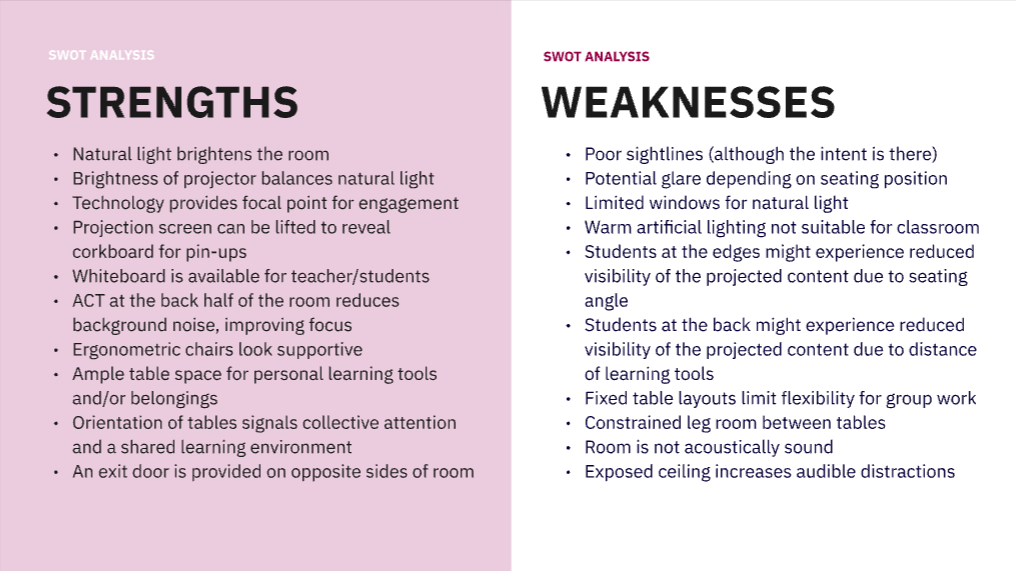
SWOT: Strength & Weaknesses
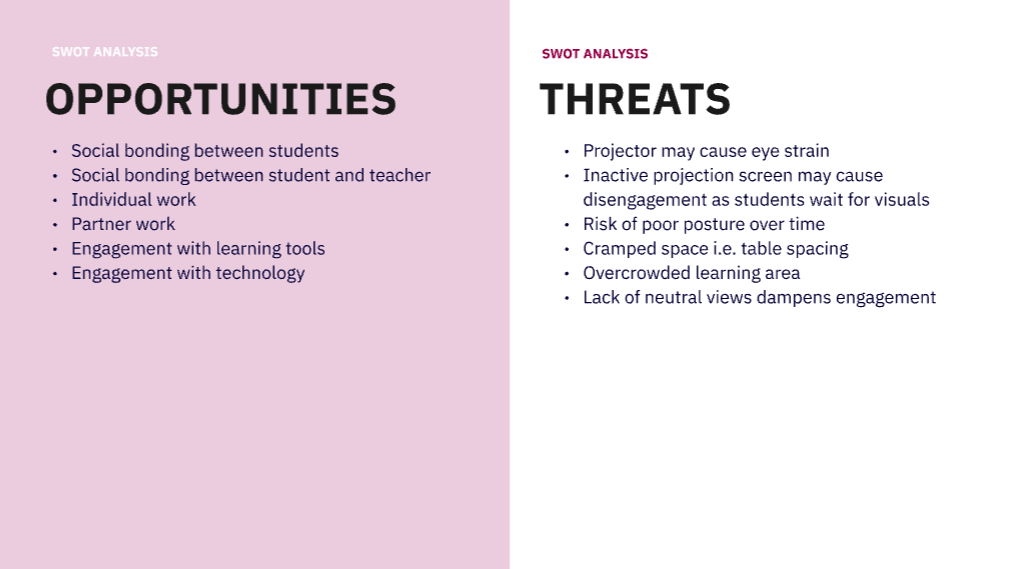
SWOT: Opportunities & Threats
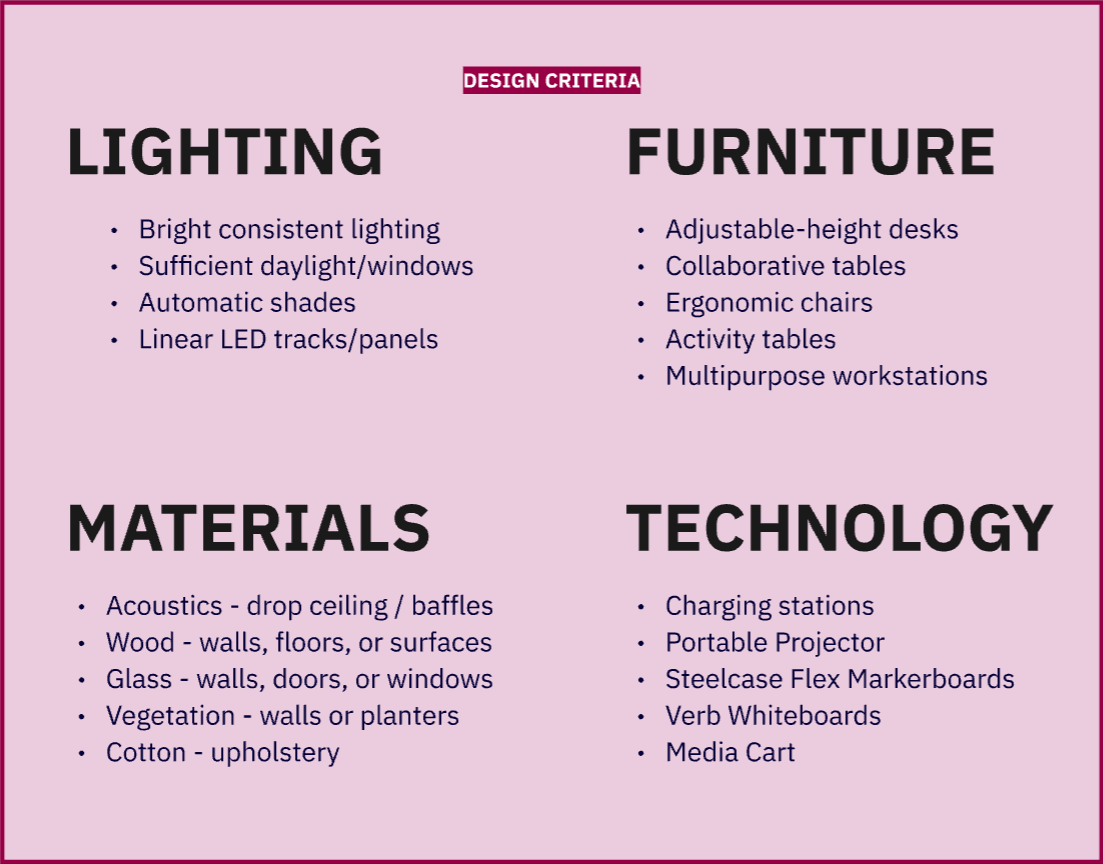
Design Criteria
Development: Concept Design
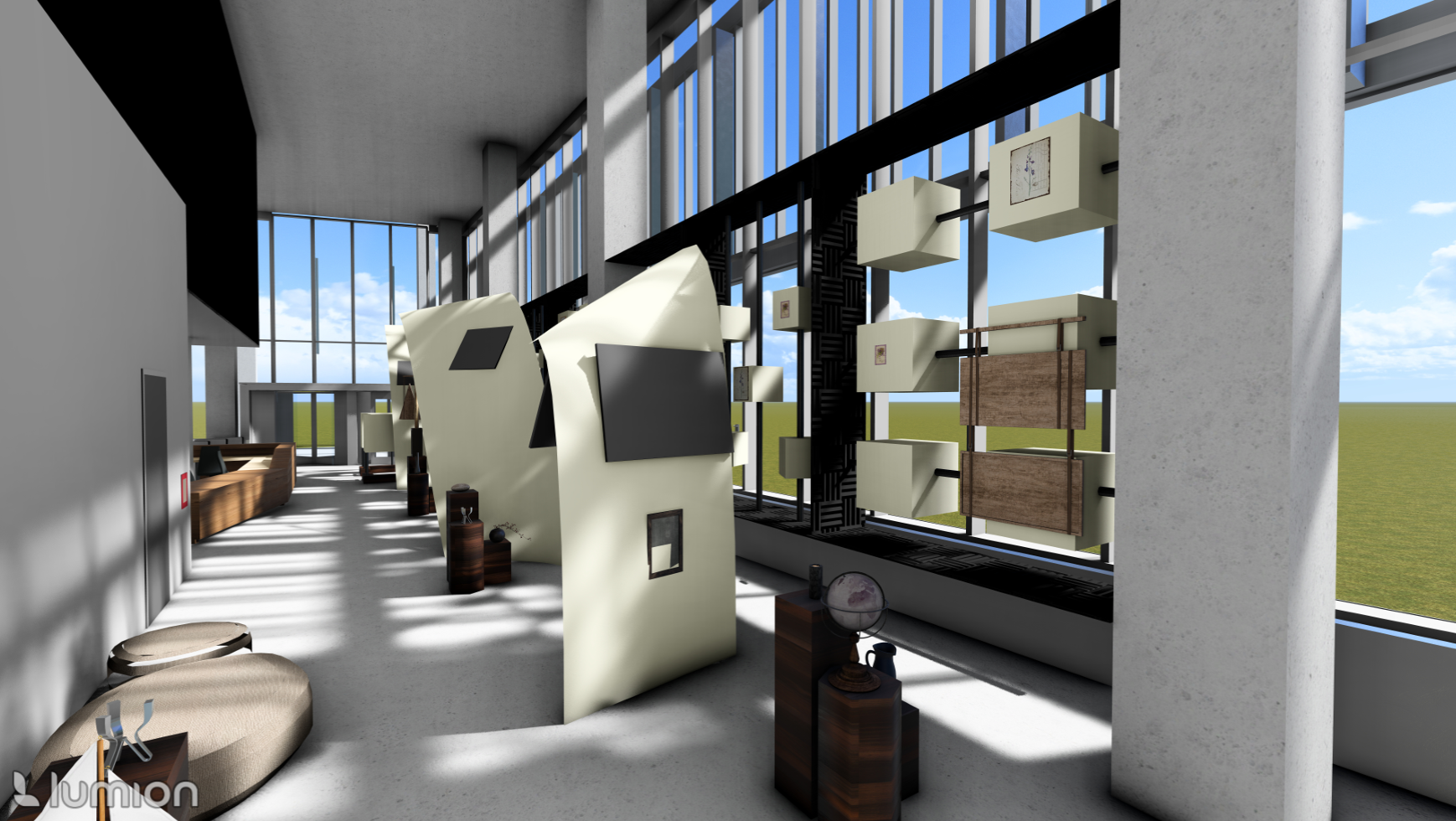
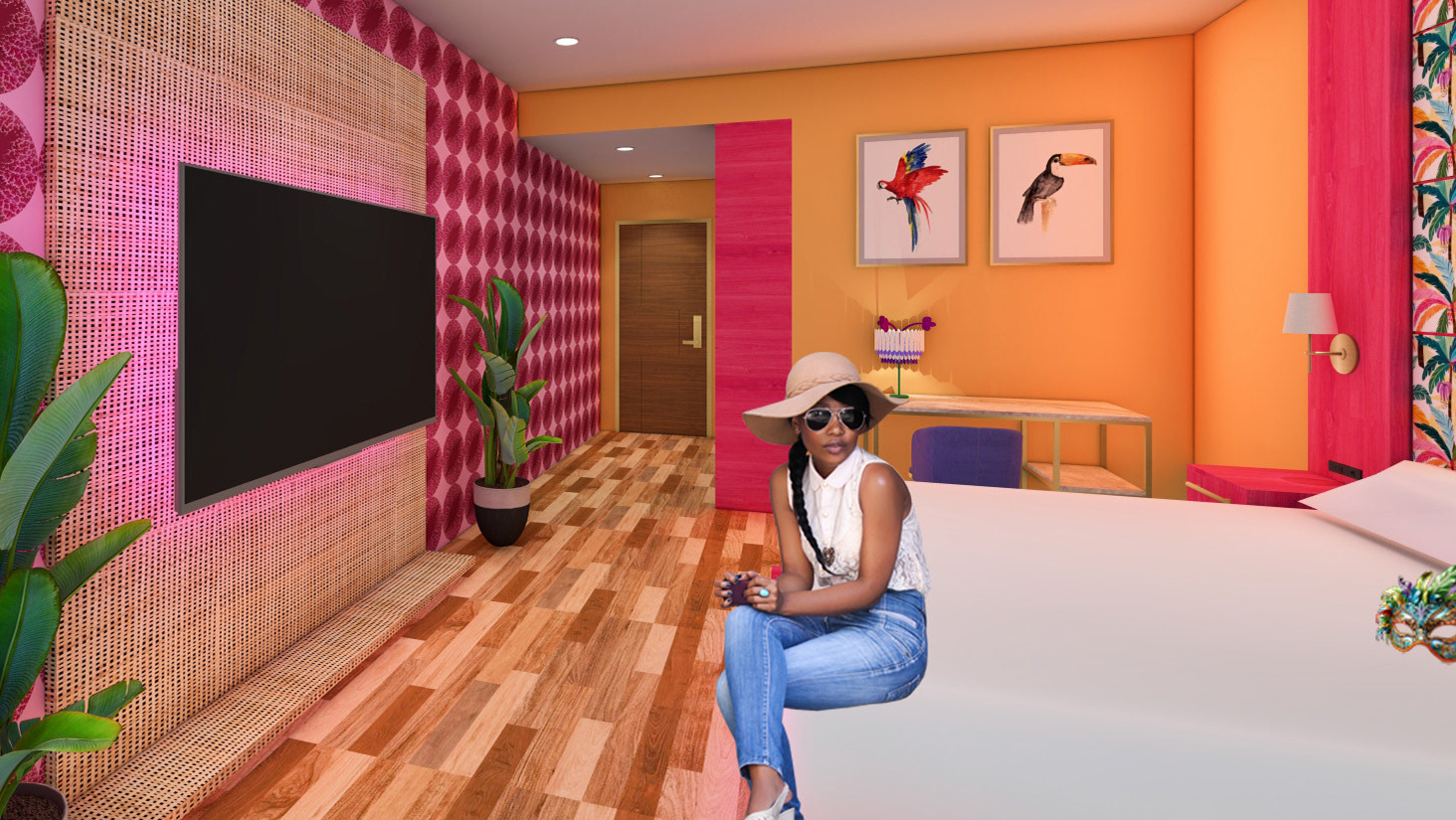
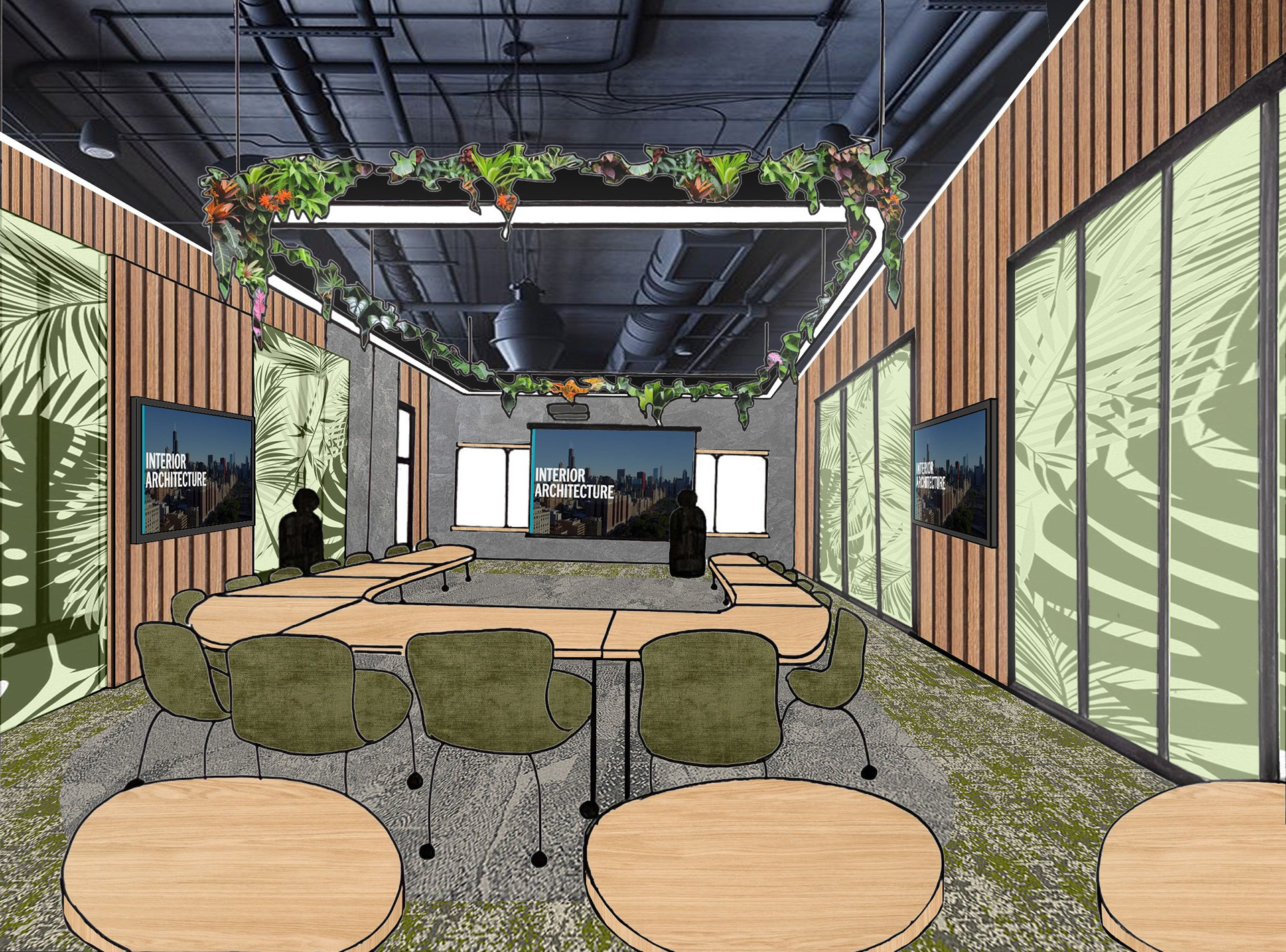
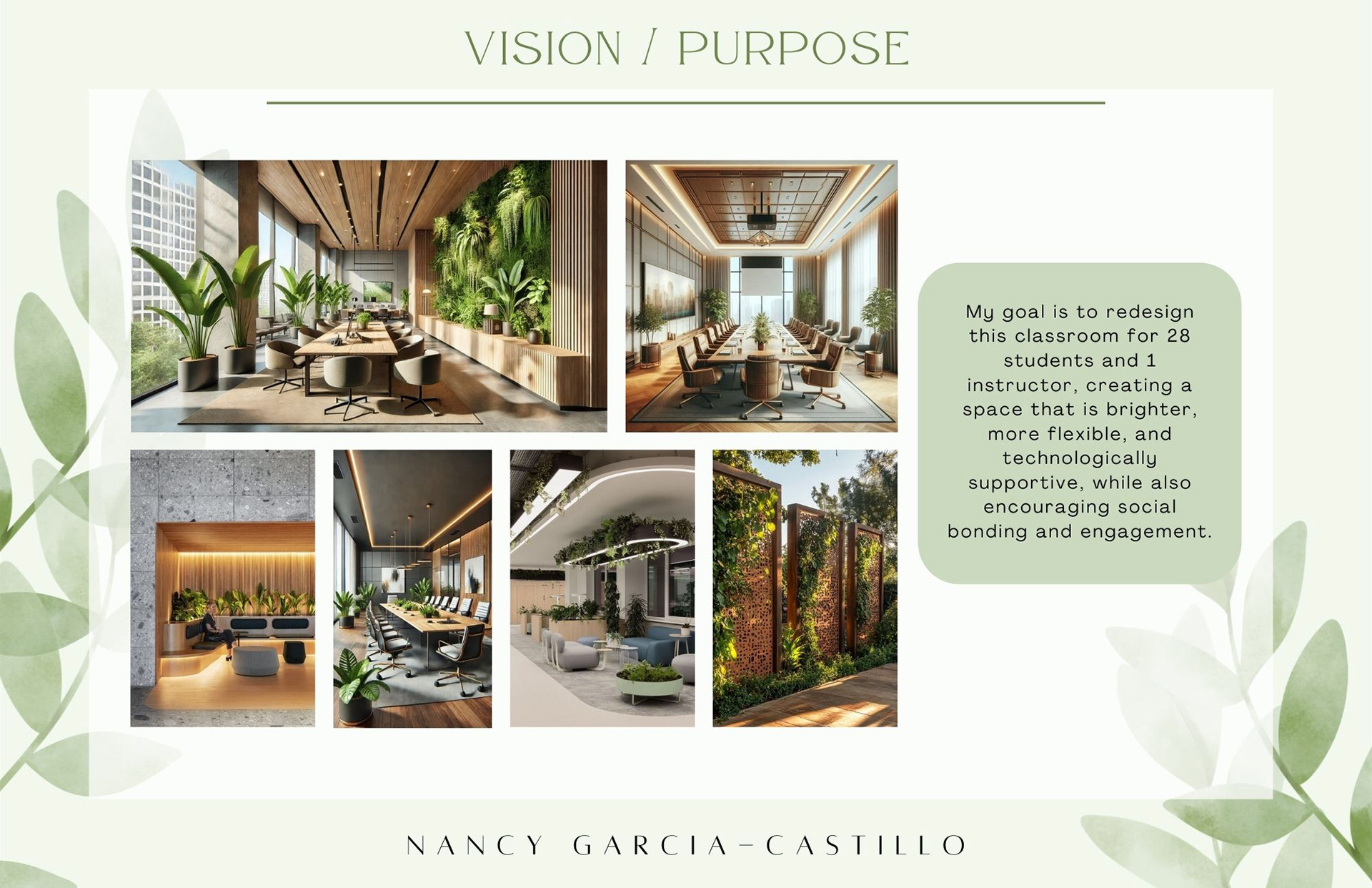
I developed a compelling narrative, dynamic visuals, and carefully selected precedent images to communicate my design solution. I began by gathering images that captured the look and feel of my proposed concept. Then, I redefined my design purpose to illustrate the improved future my solution envisions. Finally, I sketched a proposed floor plan of the redesigned space and drew over photographs of the existing classroom to create perspective views that demonstrate spatial volume and transformation.
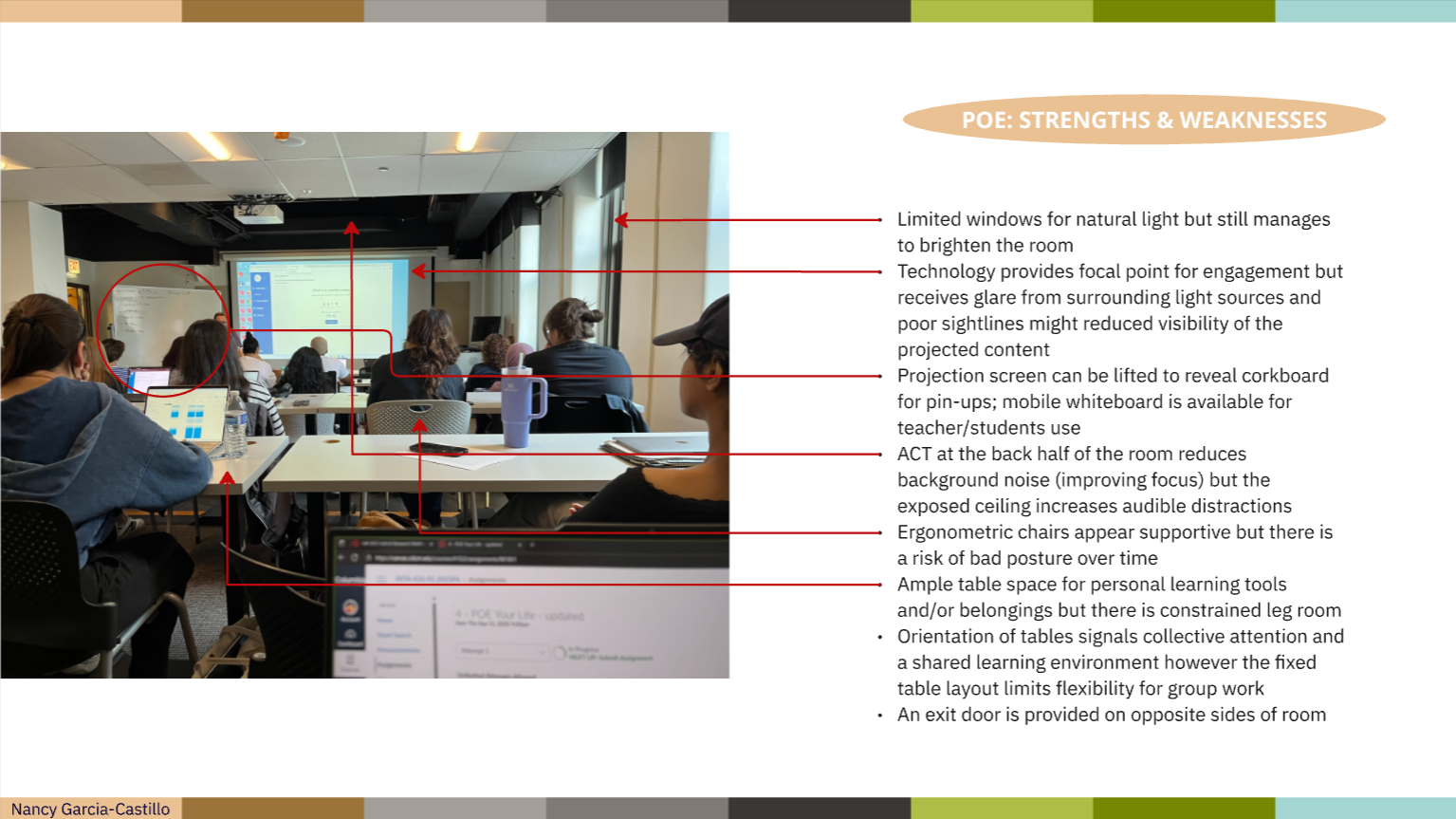
1. Post Occupancy Evaluation
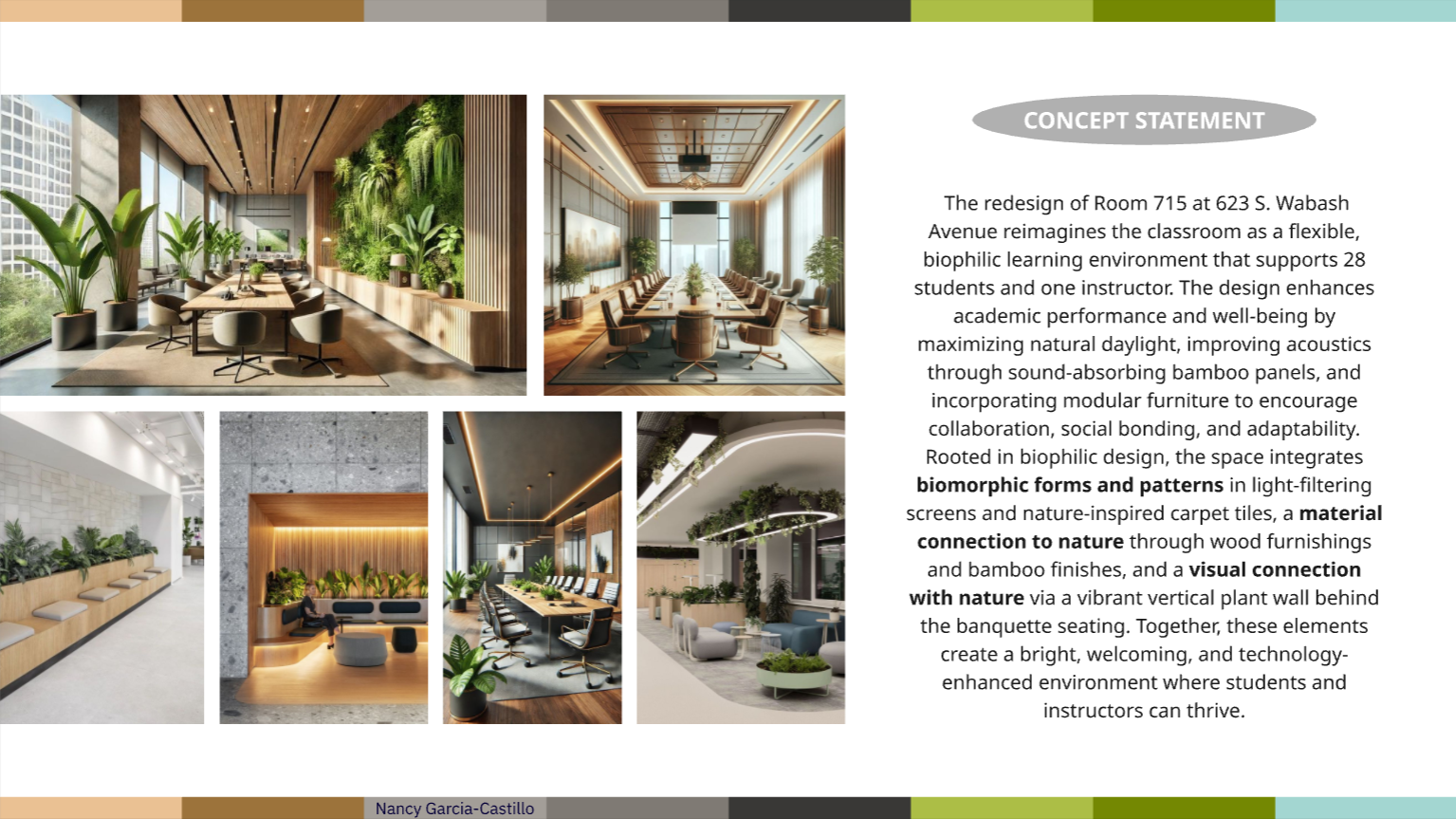
2. Concept Statement
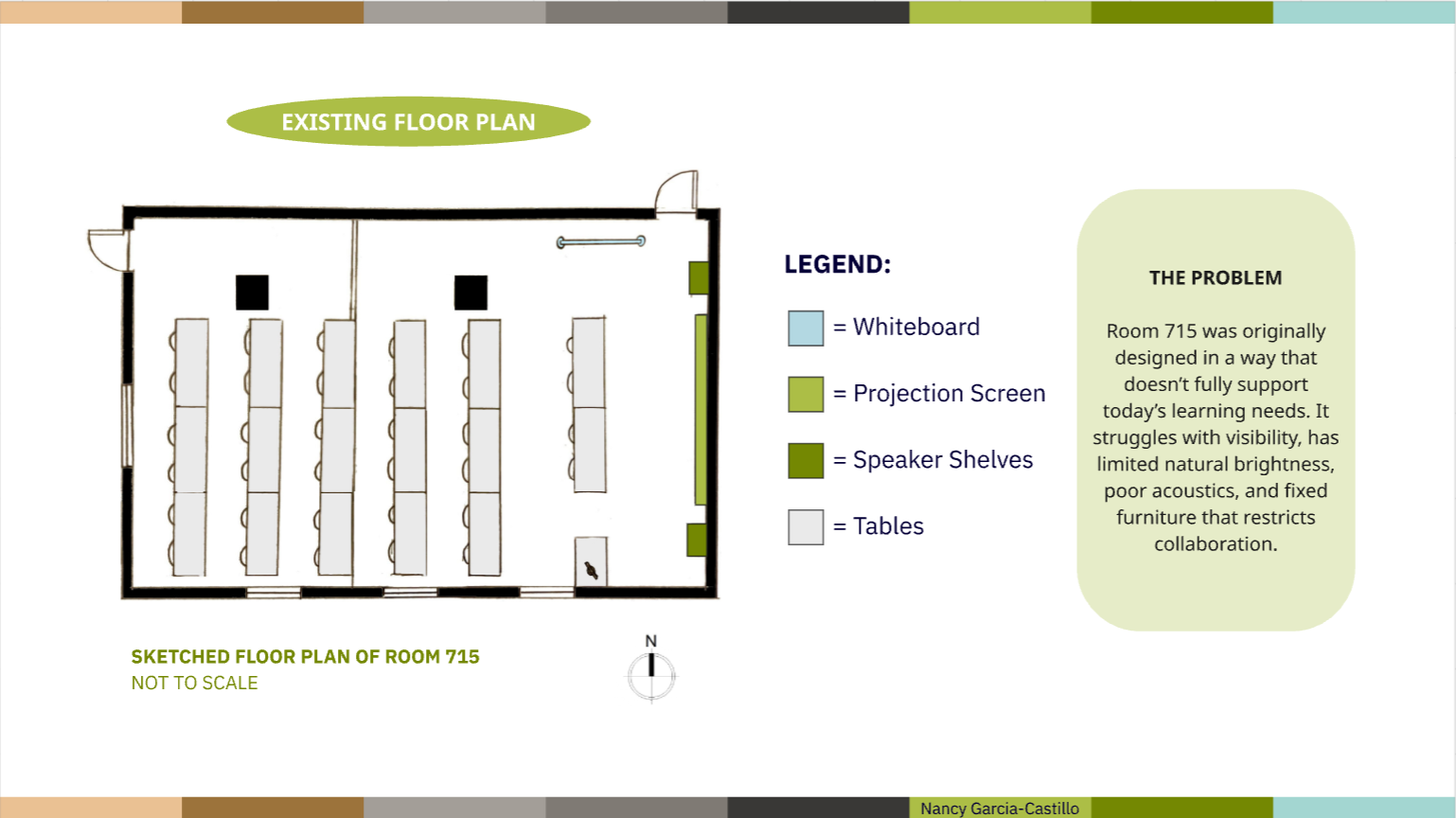
3. Existing Floor Plan
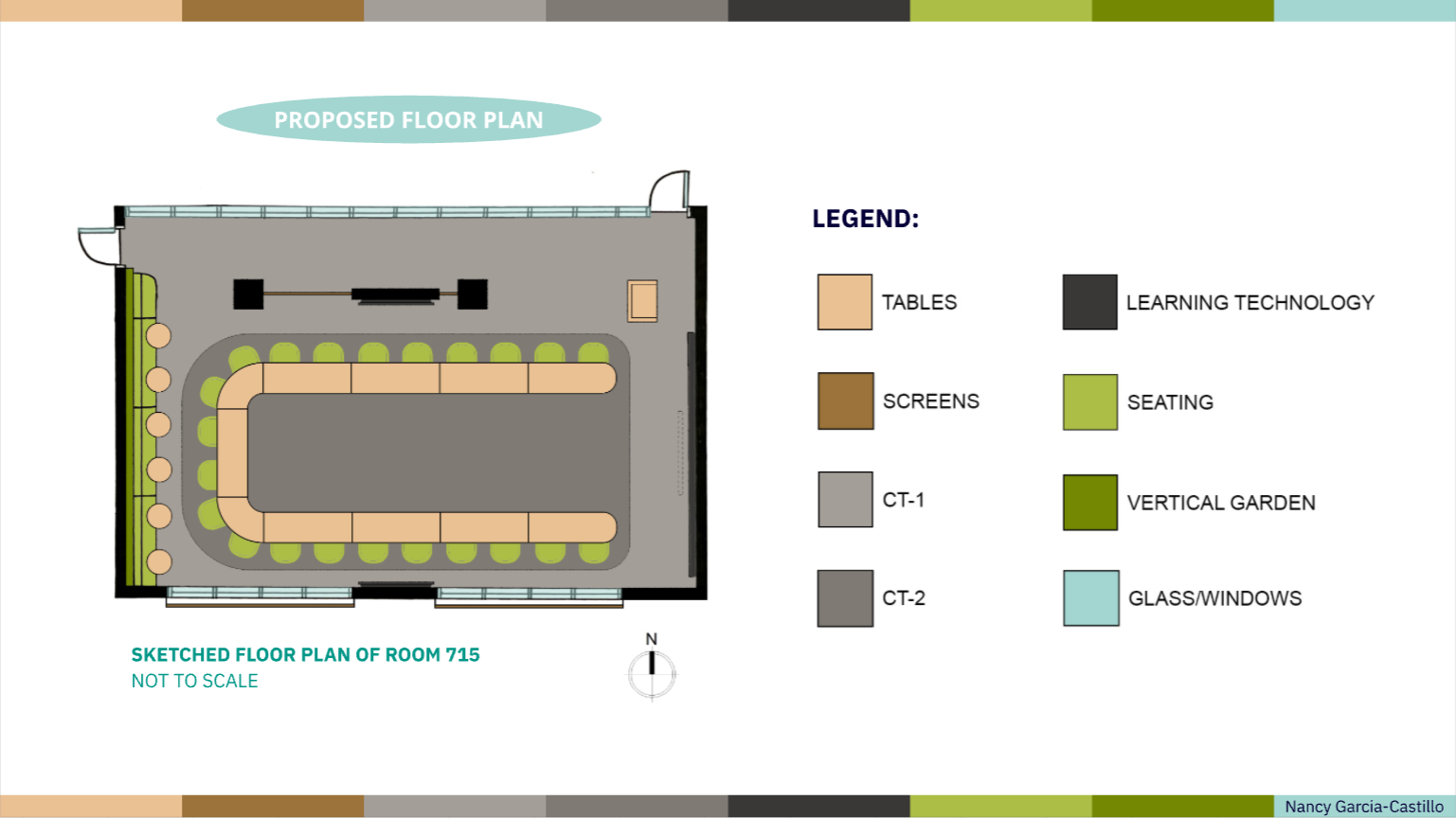
4. Proposed Floor Plan
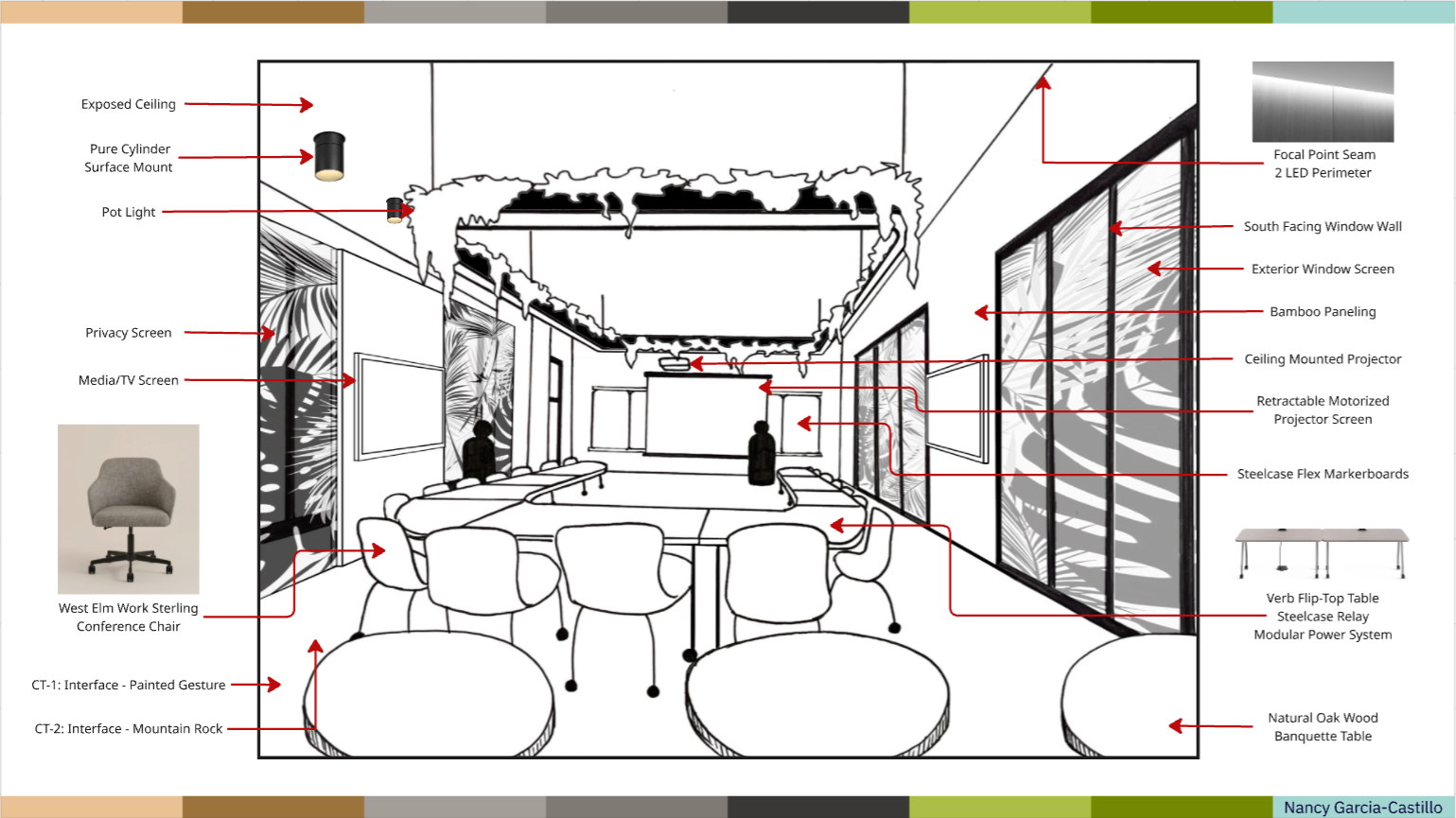
5. Perspective (Grayscale)
Implementation: Refinement
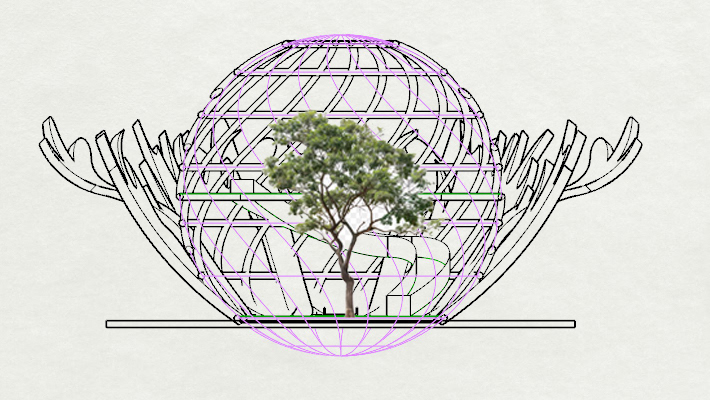
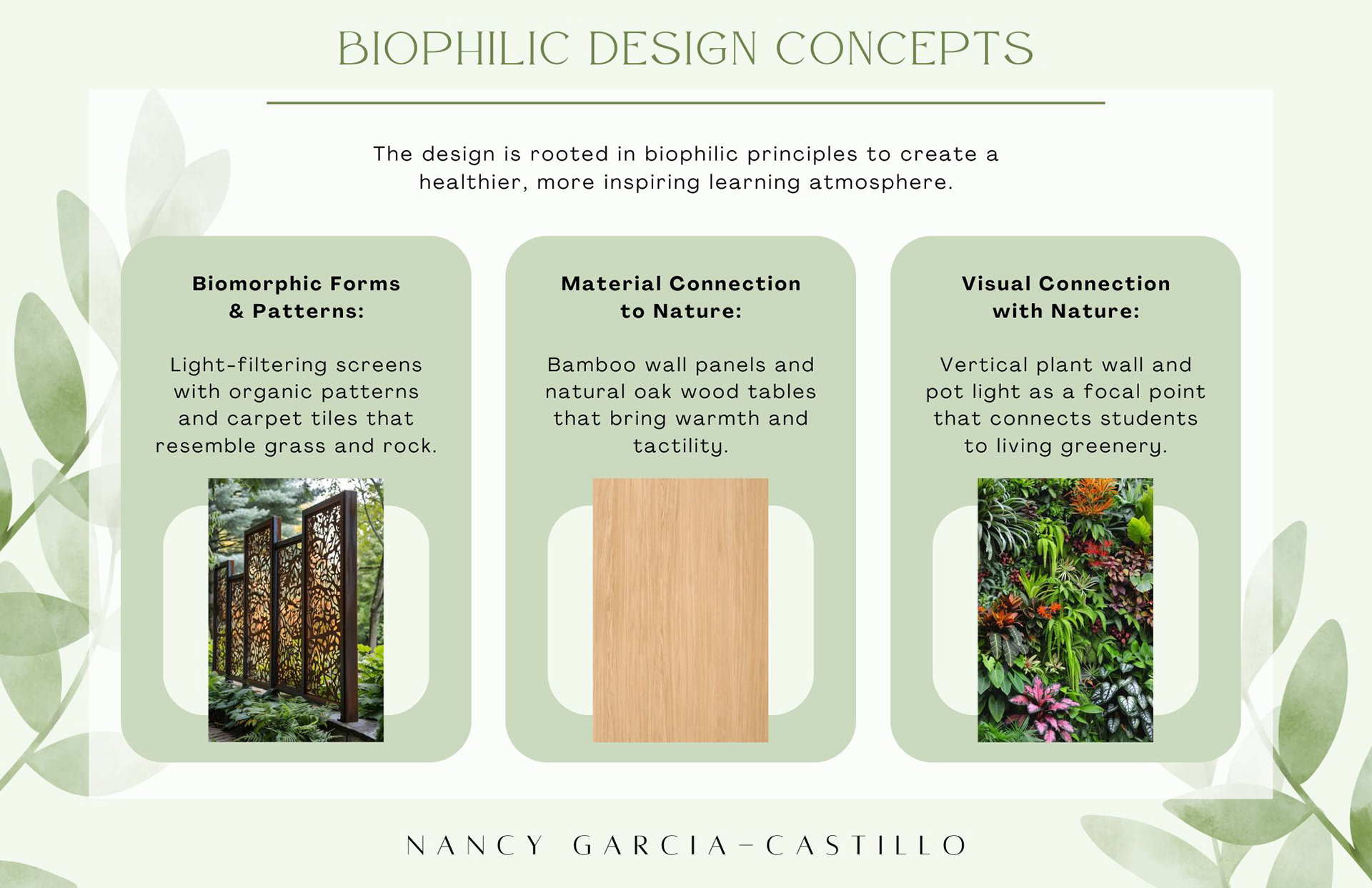
At this stage of my design process, I refined my visuals, strengthened my presentation, and updated my views and renderings. I added diagrams to clarify my layout, highlighted the integration of biophilic design concepts, and ensured my floor plans were clean and well-organized. Most importantly, I defined a clear and compelling “why” behind the design.
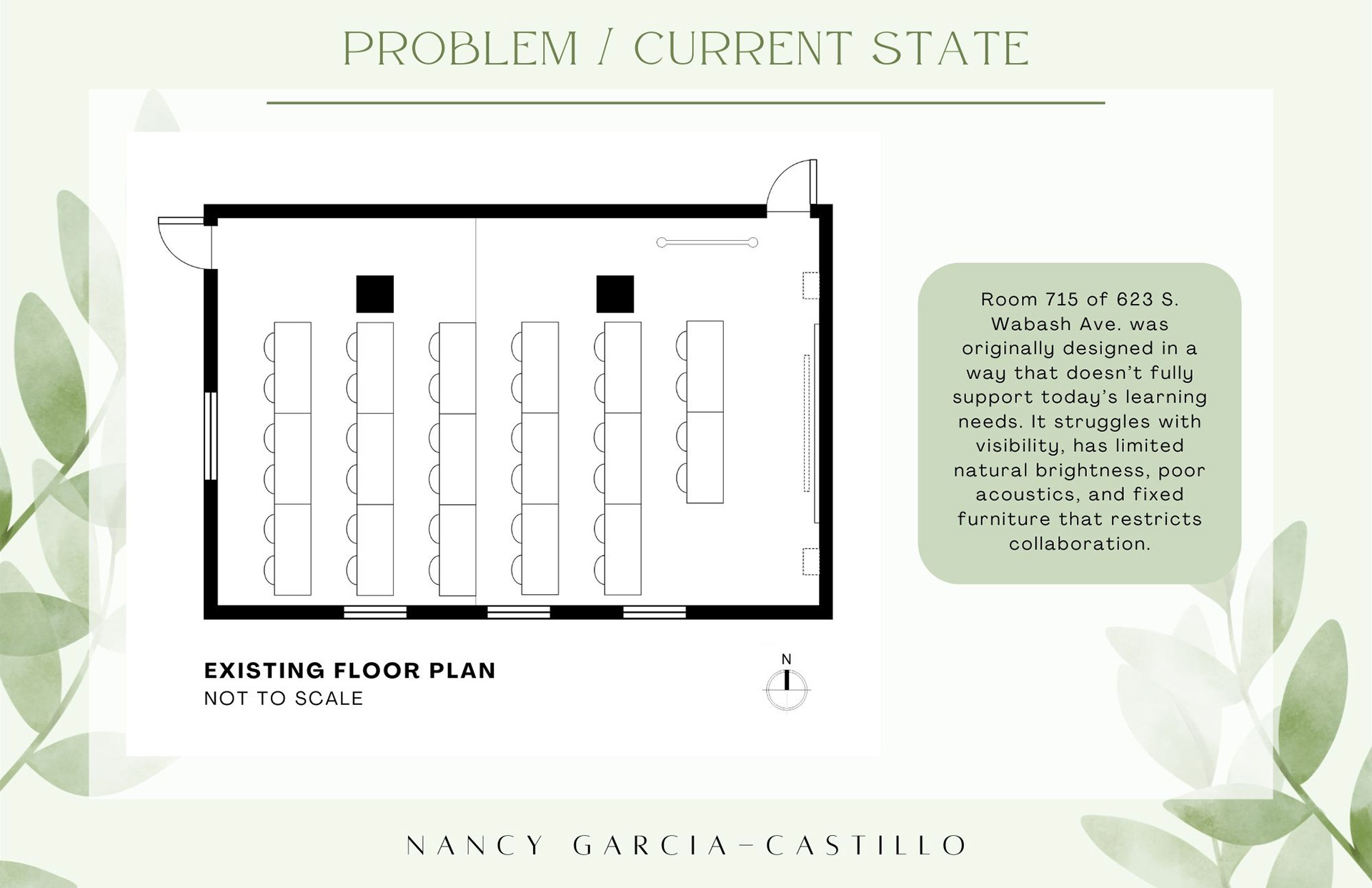
Slide 1
Slide 2
Slide 3
Slide 4
Slide 5
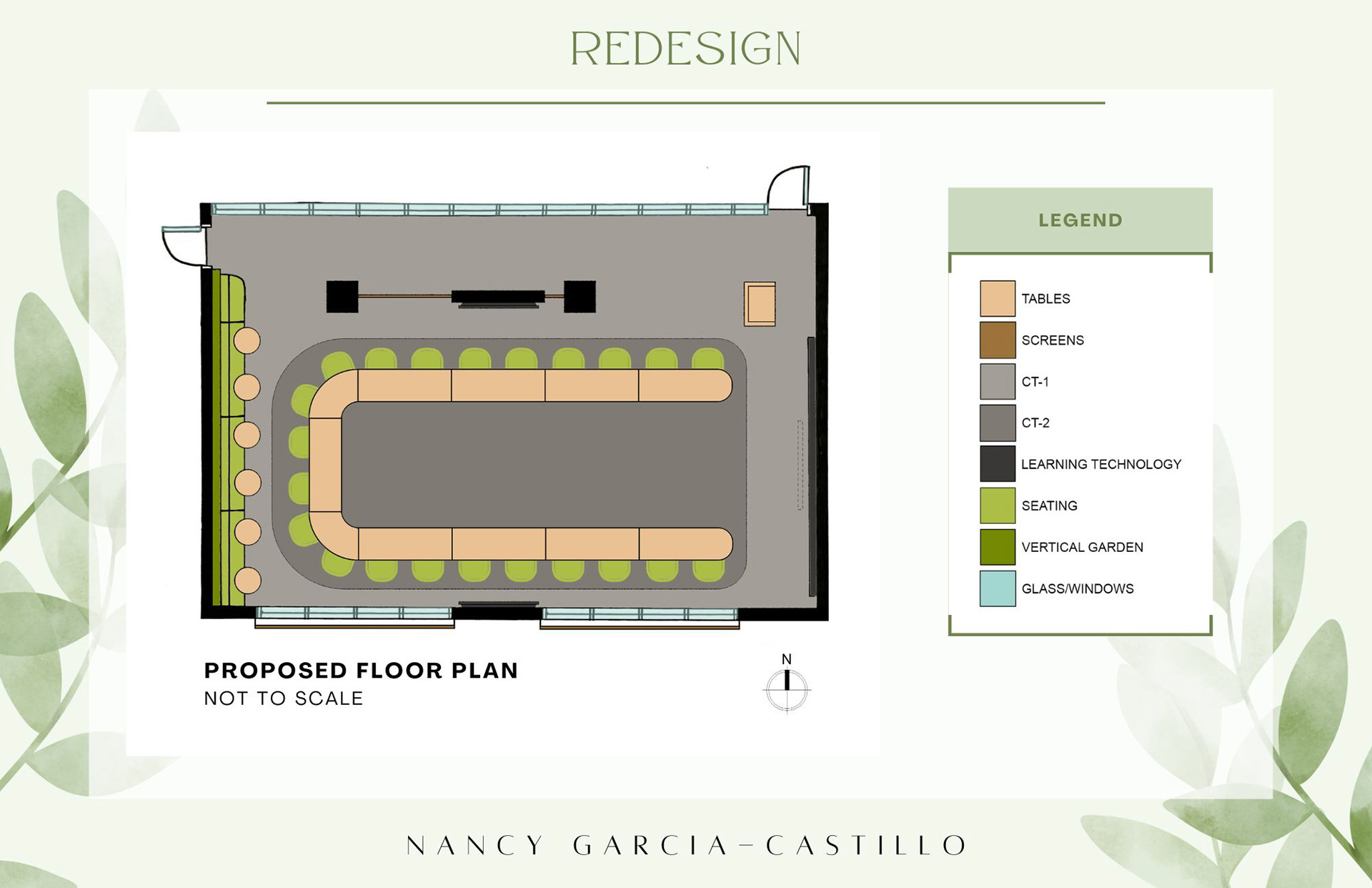
Slide 6
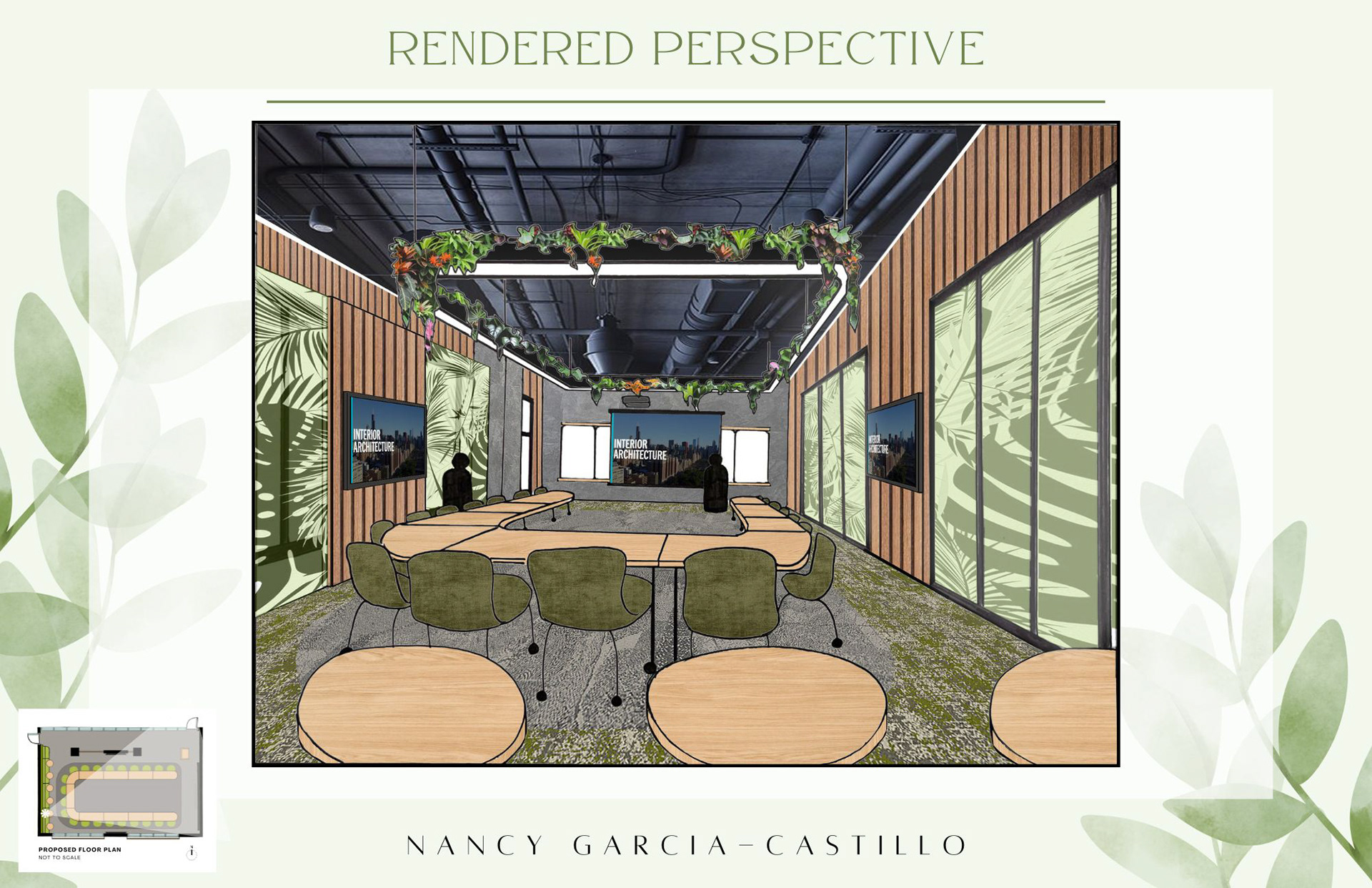
Slide 7
From Evaluation to Inspiration: A Biophilic Design Approach
I transformed my Post Occupancy Evaluation exploration into a portfolio spread for my redesign, ReRooted, which highlights my design process and communicates the value of biophilic design. The spread illustrates how I integrated biophilic principles into my project while emphasizing the crucial role of POE in shaping and refining my overall design concept.